By: Colin David
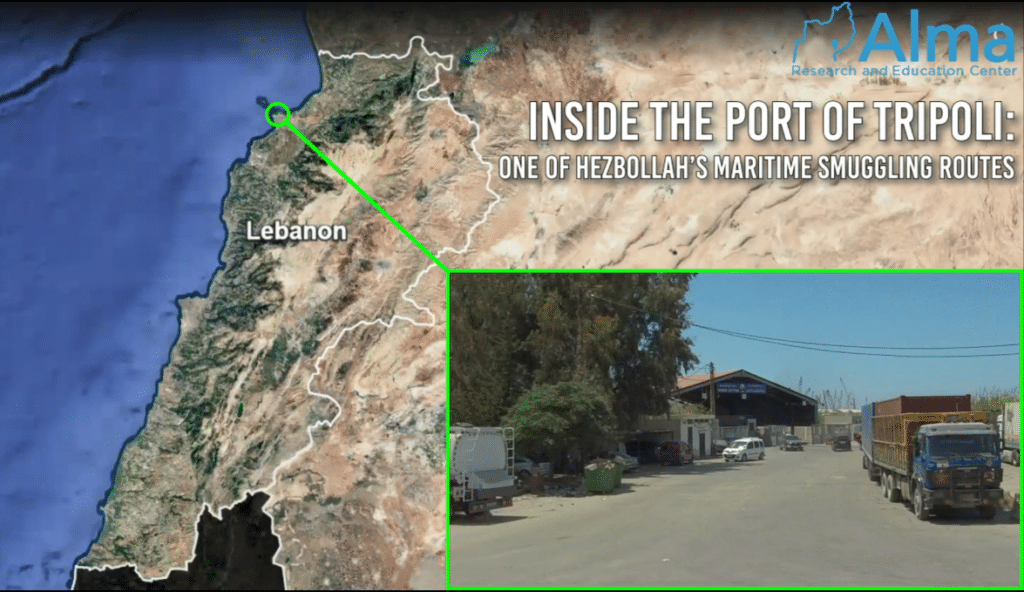
According to a report in Lebanon, Lebanese security agencies confiscated four drones that arrived at the port of Tripoli in northern Lebanon inside a container from China a few weeks ago. The shipment, declared as “agricultural irrigation equipment,” was registered in the name of a fictitious company. Each drone could potentially carry 14 kg of explosives. The Lebanese authorities are examining whether they meet the technical standards for import into Lebanon. It is worth recalling that one of Hezbollah’s main lessons from the war is a significant strengthening of its UAV and drone array. Assuming that the “importer” of the drones is Hezbollah, will the “revolving door” phenomenon occur here as well, and will the “goods” reach their destination anyway? It should be remembered that the relevant security agencies (General Security and Lebanese Army Intelligence) and Lebanese customs are infiltrated by Hezbollah. Lebanon has seven major seaports, with the port of Beirut being the largest, followed by the port of Tripoli. In our assessment, the port of Beirut remains a central anchor for Hezbollah smuggling through the maritime corridor, due to Hezbollah’s control over activities at the port of Beirut (a “comfortable work environment” in terms of location, officials from the right community, numerous assistants, and the like). However, realizing that the maritime corridor has become its main route for smuggling into Lebanon, Hezbollah has begun to diversify its use of other Lebanese seaports, such as the port of Tripoli, in order to establish its smuggling array. Hezbollah’s maritime smuggling route can reach Lebanon in two ways: The first is direct arrival at one of the seaports. The second: the smuggling vessel will not arrive directly in Lebanon but will stop at an agreed point in Lebanon’s economic or territorial waters. A Hezbollah vessel (under civilian cover), departing from Lebanon, will rendezvous with it at sea for the purpose of transferring the smuggled cargo using the “back-to-back” method. Alternatively, there is a possibility that the smuggled cargo will be lowered into the sea using buoys, and then a Hezbollah vessel will arrive to collect the cargo.