
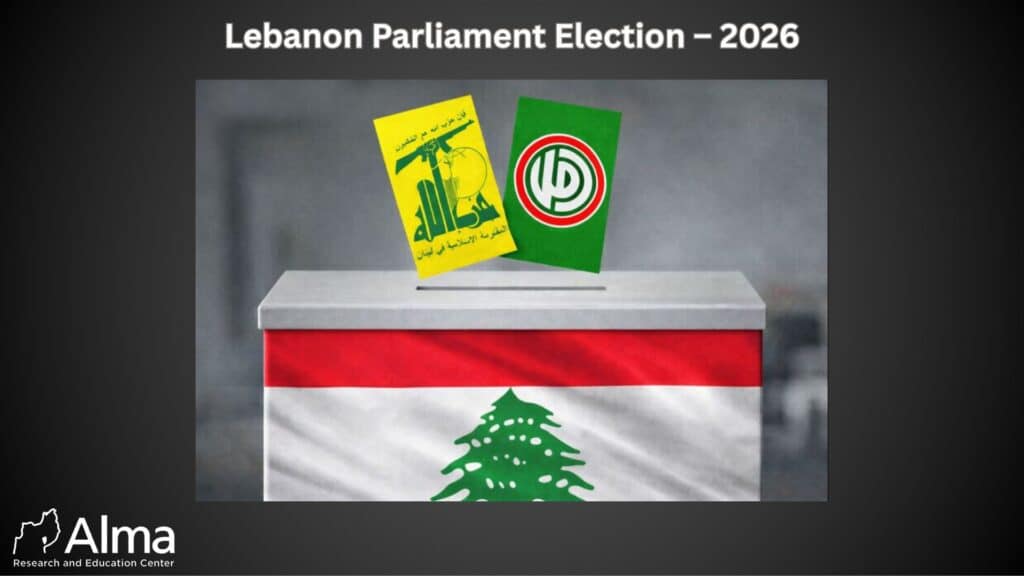
Less than six months ahead of Lebanon’s anticipated parliamentary elections, if they indeed take place as scheduled and are not postponed, Hezbollah is in the midst of intensive political and organizational preparations. Alongside strategic decision-making regarding objectives, candidates, and alliances, the organization is stepping up its civilian activities on the ground as part of an effort to preserve and consolidate its support base. At the same time, the Lebanese government continues to grapple with a number of unresolved issues, foremost among them the election date and the regulation of expatriate voting. For its part, Hezbollah has voiced strong opposition to any change in the timetable or the electoral law that could weaken its political power.
Election Scheduling: Between Logistics and Politics
Reports over the past month indicate a rising likelihood that the elections, scheduled for May 2026, may be postponed by a month or two due to delays in logistical and administrative preparations. According to Lebanon 24, the government is required to establish the preliminary voter registration committees and appeals committees by February 1, 2026, and to issue the decree calling for elections by February 15, 2026. A final decision regarding the election date has not yet been made, and further discussions are expected.
Nevertheless, Interior Minister Ahmad al-Hajjar, emphasized that there is no intention to propose a postponement and that preparations are continuing in order to meet the established deadlines. President Joseph Aoun also declared his commitment to holding the elections on schedule.
Hezbollah, for its part, is seeking to frame any potential postponement as a political move directed against it. Hezbollah MP Ali Fayad argued that certain actors are pushing to delay the elections based on the assessment that Hezbollah’s electoral base remains cohesive, and that the war did not produce the public and political impact its opponents had hoped for. Another Hezbollah MP, Yanal Salah, described holding the elections at the schedule date as “the natural and correct choice,” warning against turning the elections into a tool for paralyzing democratic life. In remarks delivered in Baalbek, he claimed that an “organized campaign” is underway to undermine the “resistance” and isolate it – an effort that he said serves Israel.
Expatriate Votes and “District 16”: The Core of the Dispute
There are currently ongoing discussions over amendments to the electoral law, centering on the issue of voting by Lebanese expatriates living abroad. The Parliament’s Defense and Security Committee has reviewed a government draft bill and called on the government to complete the regulations required to hold the elections in accordance with the existing law, which also includes “District 16.”
The definition of “District 16,” established in the 2017 electoral law, was intended to create a dedicated electoral district for Lebanese citizens living abroad and to allocate six parliamentary seats to District 16, one for each major sect. Although the electoral process for this district was supposed to be implemented in the 2022 elections, its implementation was frozen and never carried out due to political and logistical disputes.
At present, there is no political consensus on how expatriates should be integrated into the upcoming elections. Some support maintaining the six designated seats, while others call for allowing expatriates to vote in their districts of origin in Lebanon, like other citizens. The dispute reflects a more fundamental question: whether the influence of the Lebanese diaspora should be confined to a symbolic framework or fully integrated into the political system, with clear implications for the scope of its impact.
Hezbollah and Amal favor the six-seat model, fearing that broad expatriate voting would weaken their electoral power (particularly due to concerns over the influence of the Christian camp abroad). Efforts to advance amendments to the law have encountered obstacles, and in some cases Parliament Speaker Nabih Berri has even refused to place proposals on the agenda. As a result, the future of “District 16” remains unclear. According to reports in the Arabic-language media, a compromise is being considered whereby the elections would be postponed by two months in exchange for abolishing the six designated seats, so that expatriates would vote as part of the electorate for all 128 members of parliament.
The Candidate Landscape: Focal Points of Instability
The candidate lists are gradually taking shape, yet in several districts the picture remains complex. In the Sidon–Jezzine district, one of Lebanon’s most anomalous districts, significant uncertainty persists. In Jezzine, a joint list has taken shape between the Free Patriotic Movement and the Shiite duo, while in Sidon, where there are approximately 70,000 eligible voters, the configuration of candidates and alliances has yet to be clarified.
The question of Bahia al-Hariri’s candidacy continues to loom, in light of reports of a Saudi veto on the Hariri family. A decision on her part could have a decisive impact on the structure of lists and alliances in both Sidon and Jezzine. At the same time, assessments point to an especially low voter turnout, driven by public disillusionment, allegations of electoral bribery, and the absence of an effective democratic opposition.
In addition, local reports claim that Hezbollah and Amal have the potential to expand their representation in Beirut as well, including an attempt to secure a Greek Orthodox seat, a move that could serve the long-term political considerations of the Amal leadership.
“Competition” for the Shiite Vote?
Alongside Hezbollah and Amal, three parties are attempting to compete for the Shiite vote, but their electoral weight is largely negligible. The Taharror Movement places the disarmament of Hezbollah and the promotion of peace with Israel at the center of its agenda; the Lebanese Democratic Coalition seeks to erode the organization’s power through state institutions and the constitution; and the Movement for Change in the South (Tayyar al-Taghyeer Fi al-Janoub) focuses on civil and social issues and on the failure of the southern leadership.
None of these parties poses a real challenge to the Shiite duo and are largely marginal. Parties that attempt to offer an alternative to the Shiite vote struggle to operate and mobilize support due to threats and intimidation from Hezbollah and Amal.
Hezbollah’s Electoral Strategy
Against the backdrop of preparations for the elections, Hezbollah faces a strategic dilemma: strengthening its “national legitimacy” through a broad and diverse network of alliances, or striving to secure a “blocking third” that would guarantee decisive influence within the government. An attempt to “reclaim” seats previously allocated to allies could bring the organization closer to this goal, but might also weaken its camp and undermine the appearance of political diversity.
Civil Activity as a Political Tool
On the ground, Hezbollah is intensifying its activities. Reports indicate the collection of photographs of identity cards for the purpose of electoral statistics, as well as placing all of its election operatives on alert. At the same time, the organization is using civilian projects, such as the inauguration of water wells, to convey political messages, emphasizing its presence and its ability to provide services.
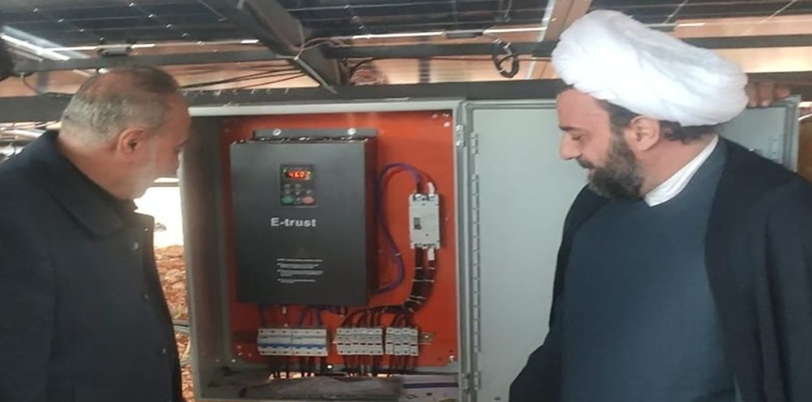
Hussein al-Nimr, Hezbollah’s official responsible for the Beqaa region, at the inauguration ceremony of a water well in the town of al-Sharbine in the al-Hermel district.
Tthe upcoming elections are not merely a contest over parliamentary seats, but a stage on which questions of sovereignty, democracy, representation, and Hezbollah’s role in the Lebanese system collide—an confrontation that is expected to intensify as the moment of decision draws nearer.


One Response
Dear Dr Zoe,
Hezbollah has too much influence in Lebanon. It is an evil parasitic cancer, imlpeding good government. Perhaps the best outcome would be that Hezbollah will choose to support the ayatollah regime in war, and therefore be destroyed by overwhelming force. Light will then cast out the darkness.