An examination of the weapons used by Hezbollah in the two most recent rounds of fighting—during the “Swords of Iron” war and the northern campaign (“Northern Arrows”), compared to the current round under Operation “Lion’s Roar”—indicates continuity in the organization’s operational patterns alongside certain changes in its use of weaponry.
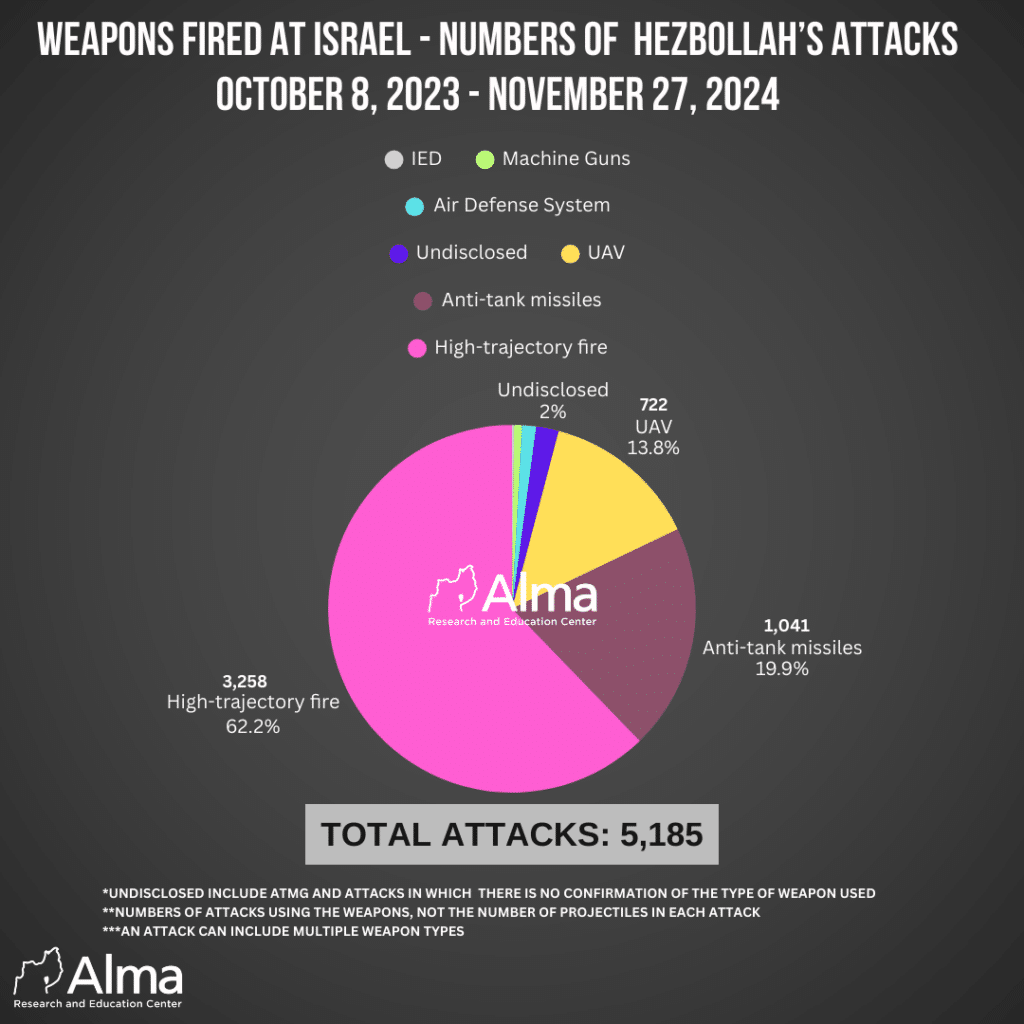
During the period between October 8, 2023 and November 27, 2024, 5,185 attacks were carried out against Israel by Hezbollah. The primary weapon used by Hezbollah in its attacks against Israel was high-trajectory fire (rockets and missiles), which accounted for 62.2% of all weapons used—3,258 attacks. This was followed by anti-tank guided missiles (ATGMs) with 1,041 attacks (19.9%), while UAV launches accounted for 13.8% of the attacks (722 incidents).
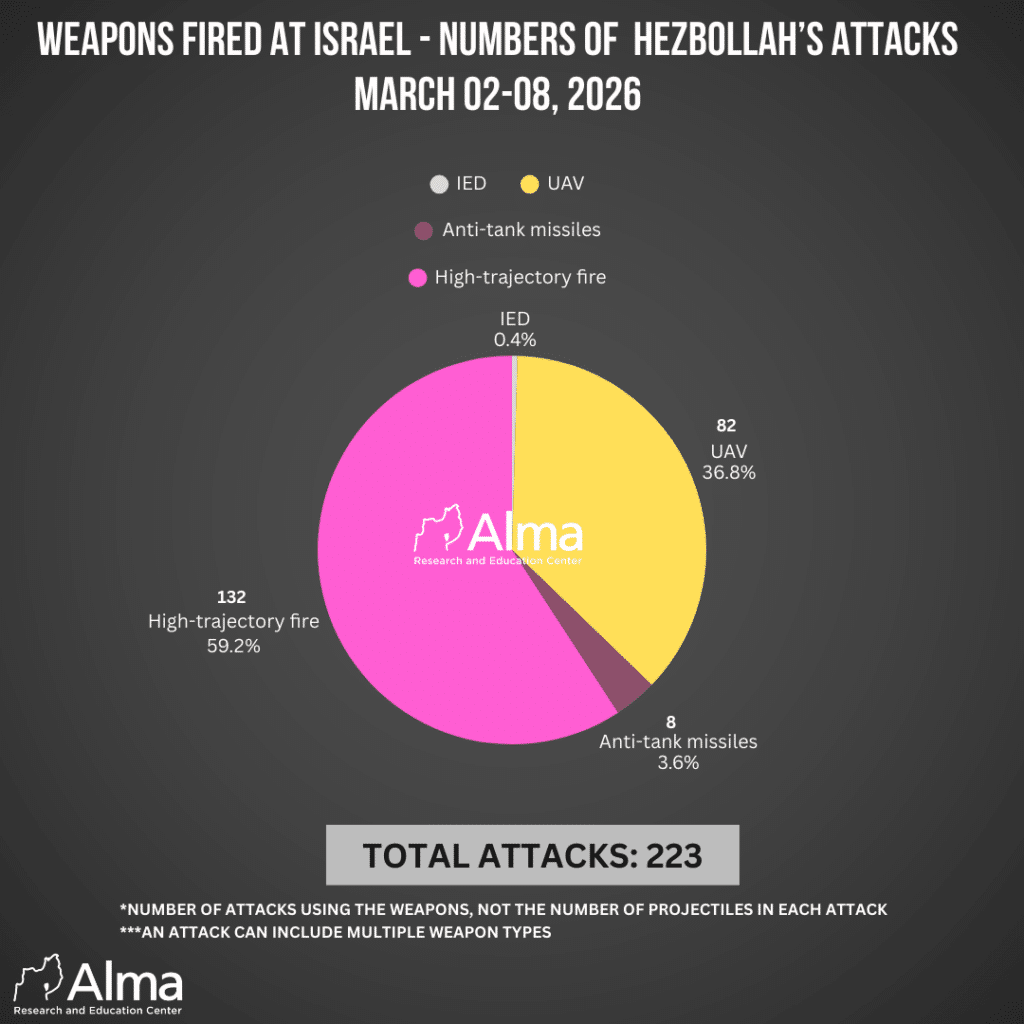
According to data from the current round under Operation “Roar of the Lion” (March 2–8), out of 223 waves of attacks carried out against Israel so far, rockets and missiles remain Hezbollah’s primary weapon, accounting for approximately 59.2% of the attacks.
However, a significant change is evident in Hezbollah’s use of UAVs: UAV launches have accounted for approximately 36.8% of the attacks so far, a much higher proportion than that recorded during the extended period of fighting since October 2023.
This comparison indicates that although Hezbollah’s core offensive capability remains rocket and missile fire, the organization has significantly increased its use of UAVs in the current round of fighting. This trend may indicate a tactical adaptation by Hezbollah, involving the growing integration of unmanned aerial systems alongside the traditional weapons the organization has relied on for years.
At present, this trend aligns with our assessment that following the 2024 war, Hezbollah defined UAVs as a central effort in the confrontation and invested heavily in the recovery processes of Unit 127 and in the force buildup of its UAV array.