The Iranian Arena
The strikes in Iran continue at several locations across the country. According to the IDF spokesperson, most of the key assets of the Basij organization and the Internal Security Forces in Ilam Province have been destroyed. Among the targets hit were the provincial Internal Security headquarters, the headquarters of the central intelligence body of the Iranian regime, a Revolutionary Guards command responsible for protest suppression battalions, the headquarters of the Internal Security special unit, as well as several Basij unit headquarters and additional Revolutionary Guards infrastructure.
As part of a combined strike in Tehran and Tabriz, the IDF targeted several central headquarters where activity by members of the Iranian regime’s security forces had been identified. The targets included the headquarters of the special units in Tabriz, a Revolutionary Guards military compound in Tehran, the headquarters of a security unit responsible for launching ballistic missiles and conducting artillery fire, the headquarters of the Intelligence and General Security Police in Maragheh Province, and a large Basij forces compound in Tabriz.
In addition, a strike was reported against a Revolutionary Guards base in the city of Kangavar in Kermanshah Province. Additional strikes were reported at Shiraz Airport in southern Iran, at Mehrabad Airport in Tehran, and in the cities of Saqqez, and Marivan. Fuel depots near Kerman Airport were also reported to have been struck.
At the same time, it was reported that U.S. forces attacked several Iranian naval vessels on March 10, including 16 mine-laying vessels near the Strait of Hormuz. In addition, it was reported for the first time that American B-1 strategic bombers took off from the UK bases to conduct strikes in Iran.
According to unofficial and unverified reports, Asadollah Badfar, the commander of the Basij, was eliminated in the recent strikes in Iran.
Iran Attacks Targets in the Middle East
Iran continues to carry out attacks against various targets across the Middle East.
In the United Arab Emirates, a strike was reported at Dubai Airport following the penetration of two Iranian UAVs. According to reports, four people were injured as a result of the impact.
At the same time, it was reported that a Thai vessel was hit in an Iranian attack in the Strait of Hormuz. According to various reports, this is the third vessel to be struck by Iranian attacks in the Strait of Hormuz area since the beginning of the war.
According to data published by the Al Jazeera channel, the number of casualties in the Gulf states since the beginning of the war amounts to dozens of fatalities and hundreds of injured. The breakdown by country is as follows:
In Iraq, 15 fatalities and dozens of injured were reported; in Jordan, 14 injured; in Kuwait, six fatalities and dozens of injured; in Bahrain, two fatalities and dozens of injured; in Saudi Arabia, two fatalities and 12 injured; in the United Arab Emirates, six fatalities and 122 injured; in Qatar, 16 injured; and in Oman, one fatality and five injured.
The Israeli Arena
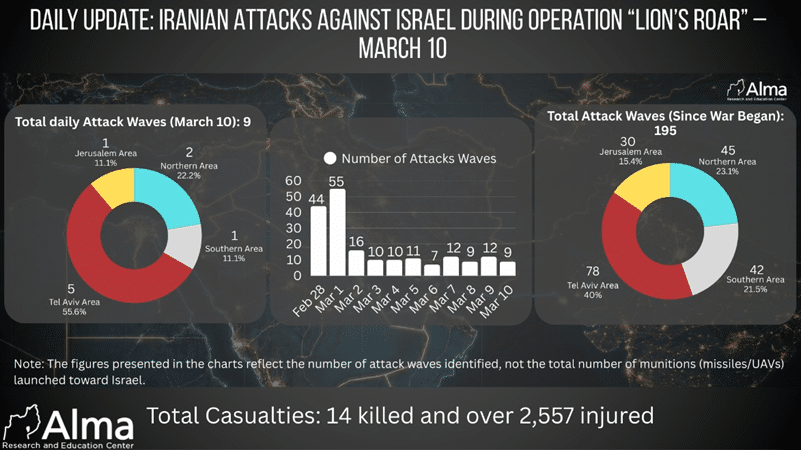
On March 10, nine waves of attacks against Israel using ballistic missiles were recorded. The data refer to the number of attack waves identified, not to the total number of munitions actually launched.
Geographically, most of the attacks were directed toward the Tel Aviv area, which sustained five attack waves (55.6%). In addition, two attack waves (22.2%) were directed toward northern Israel, while one attack wave (11.1%) targeted southern Israel and another (11.1%) targeted the Jerusalem area.
Since the beginning of the campaign on February 28, 195 Iranian attack waves toward Israel have been identified. In the geographic distribution of all attacks, the central region—particularly the Tel Aviv metropolitan area—constitutes the main target, with 78 waves (40%). It is followed by the northern region with 45 waves (23.1%), the southern region with 42 waves (21.5%), and the Jerusalem area with 30 waves (15.4%).
An examination of the daily trend indicates that the first two days of the war (February 28 and March 1) were the most intense in terms of the number of Iranian attacks against Israel. From the third day (March 2), a relative stabilization in the number of attack waves is evident, which in recent days has averaged about 10 attack waves per day.
Impact on the Civilian Sphere in Israel:
• Since the beginning of the war, 14 civilians in Israel have been killed and 2,557 have been injured to varying degrees. In the last 24 hours alone, approximately 200 civilians were injured as a result of missile fire from Iran.
• More than 3,000 residents have been forced to leave their homes due to missile impacts and interception debris.
• The main cities where impacts from Iranian missiles have been recorded are Tel Aviv, Bnei Brak, Ramat Gan, Petah Tikva, Beit Shemesh, and Be’er Sheva.
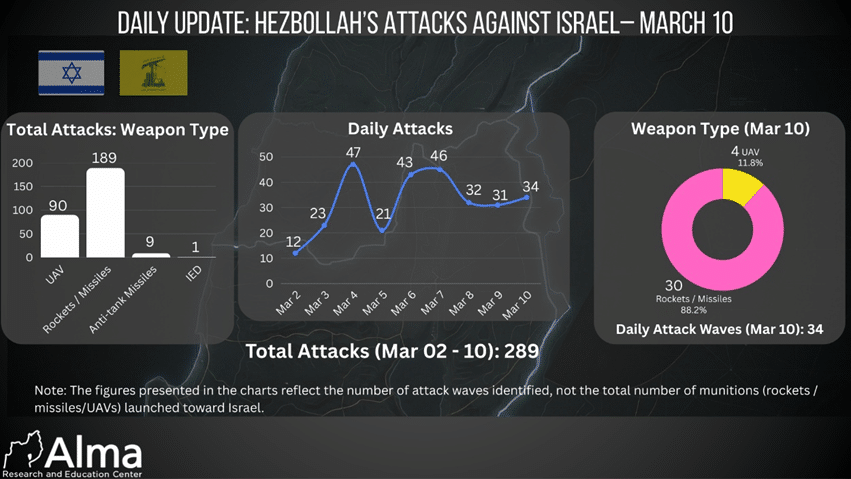
On March 10, 34 Hezbollah attack waves against Israel were recorded. The attacks were carried out primarily using rockets and missiles, alongside the use of UAVs. According to the data, 30 of the attack waves (88.2%) were carried out using rockets and missiles, while 4 attack waves (11.8%) were carried out using UAVs.
Since Hezbollah joined the fighting on March 2, a total of 289 attack waves against Israel have been identified. The data refer to the number of attack waves, not to the total number of munitions actually launched.
Trends in the use of weapons: An examination of the types of weapons used by Hezbollah since the beginning of its involvement in the fighting shows that rockets and missiles continue to constitute the organization’s primary means of attack, with 189 attacks. In addition, UAV launches account for 90 attacks, reflecting Hezbollah’s significant and ongoing use of UAVs. Furthermore, 9 attacks using anti-tank missiles and one explosive device attack were documented during this period (an event based on a Hezbollah publication).
Daily trend: An examination of the data indicates fluctuations in the scale of attacks throughout the days of the campaign. After 12 attack waves on the first day (March 2), the number increased, reaching a peak of 47 attack waves on March 4. This was followed by a temporary decline and then another increase on March 6–7 (an average of 44 attack waves), after which there was a relative stabilization at an average of 32 attack waves per day. This trend indicates the maintenance of a sustained level of offensive activity by Hezbollah, despite daily fluctuations in the volume of attacks.
Lebanon and Hezbollah
Lebanese Prime Minister Nawaf Salam stated that Lebanon does not wish to be drawn into an adventure or a new war. According to him, given the security risks surrounding Lebanon, the country has no interest in further escalation. Salam noted that the Lebanese Army has announced its readiness to begin the second phase of the plan to disarm Hezbollah in the north of the country, in the area between the Litani and Awali rivers. He stated that, the implementation of the second phase may take about four months, provided that the Lebanese Army receives the same level of international assistance and support that was provided during the implementation of the first phase, which focused on disarming Hezbollah in the area south of the Litani.
Lebanese President Joseph Aoun emphasized that the Lebanese Army operates solely in the national interest and called for it not to be turned into a target of internal political struggles.
Additional actors in the Lebanese political arena also expressed positions against Hezbollah and Iran. For example, Gebran Bassil emphasized the need to “remove Lebanon from the axes,” and warned both against Israel and Hezbollah, while also raising concerns about potential security deterioration along the Syrian border. Saad al-Hariri strongly criticized Iran and argued that it is sacrificing Lebanon as part of its confrontation with the Arab world.
At the same time, according to various reports, Washington has effectively rejected the Lebanese initiative to open negotiations in its current format. According to sources cited in the reports, the main reason is American distrust in the ability or willingness of the Lebanese state—and in particular the Lebanese Army—to disarm Hezbollah or effectively restrain its activities. At the same time, the possibility was raised that the United States may in the future consider promoting a trilateral negotiation track that would include Lebanon and Israel, as well as Syria.
According to a report in the Lebanese newspaper Al-Akhbar, which is affiliated with Hezbollah, the United States is demanding that Lebanon designate the entire Hezbollah organization—both its military and political wings—as a terrorist organization. It was also reported that Washington clarified to Beirut that it views the Iranian arena and the Lebanese arena as separate, and that the end of the fighting with Iran is not necessarily linked to the end of the fighting in Lebanon. In addition, it was claimed that Israel enjoys full American support for the continuation of its military activity against Hezbollah in Lebanon until a meaningful change in the security situation is achieved.
At the same time, reports indicate that Hezbollah continues to reject the approach promoted by the Lebanese state. An article published under the name of Member of Parliament Mohammad Raad reflects the organization’s position, according to which the “exclusivity of arms” in the hands of the state cannot be implemented as long as, in its view, Lebanese sovereignty is not complete and as long as Israel retains the ability in practice to determine the boundaries of war and peace in the region.
Accordingly, Hezbollah continues to justify its possession of weapons by arguing that they constitute “resistance weapons,” intended to fill the security vacuum that has emerged, in its view, due to the weakness of the Lebanese state and the continued threat from Israel. In doing so, the organization signals that at this stage it has no real intention of disarming in accordance with the framework the Lebanese government seeks to promote.
Bodies affiliated with Hezbollah also continue to provide public and legal legitimacy for the continuation of the armed struggle. Among other things, positions have been published claiming that carrying weapons as part of the “resistance” does not constitute an offense, but rather a right derived, in their view, from the Lebanese constitution and the principle of self-defense.
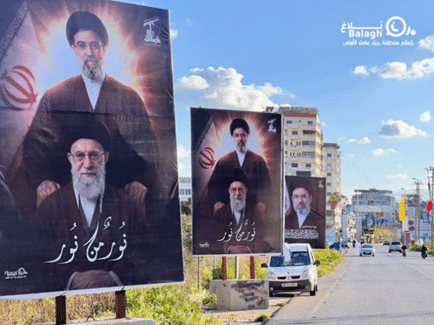
Jabal Amel area, Lebanon: Signs expressing support for Iran’s new Supreme Leader – Mojtaba Khamenei.
In the past 24 hours, Israel continued its strikes in the Dahieh district of Beirut and in southern Lebanon. At the same time, additional evacuation warnings were issued as part of increased pressure on areas identified with Hezbollah infrastructure.
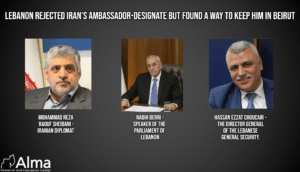
The IDF announced that during the night between March 8 and March 9, the Israeli Air Force eliminated Hassan Salameh, commander of the “Nasr” unit in Hezbollah. In addition, Iranian sources confirmed that four Iranian “diplomats” were eliminated in an Israeli strike on a room in a hotel in Beirut on the same day (March 8 – the elimination of four Quds Force personnel from the Lebanon Corps and the Palestine Branch at the Ramada Hotel in Beirut).
According to data from the UN Refugee Agency, the number of registered displaced persons in Lebanon has reached approximately 759,300. According to another report by the Lebanese Minister of Social Affairs, the total number of displaced persons has already reached about 780,000.
Syria
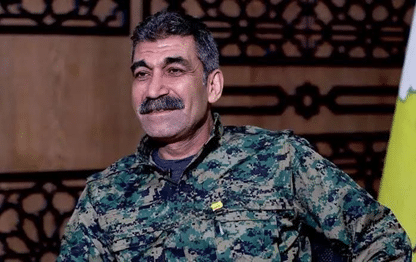
Siphan Hamo, a senior figure in the SDF (Syrian Democratic Forces – the Kurdish forces), has been appointed Deputy Minister of Defense of Syria.
The International Arena
The British government announced its decision to ban the annual “Quds Day” march, which had been planned to take place in central London. The event is held every year and is associated with support for the Iranian regime and the Palestinian cause.
Spain announced that it is withdrawing its ambassador from Israel and lowering the level of its diplomatic representation in the country, a step reflecting an escalation in diplomatic tensions between the two states.
China’s Foreign Minister, Wang Yi, addressed the regional escalation and stated that the responsibility for preventing further escalation lies, in his view, with the United States and Israel. He also emphasized that China opposes the expansion of the war and condemns harm to civilians and non-military targets.
Russian President Vladimir Putin referred to the economic implications of the war and assessed that the rise in oil prices may create opportunities for the Russian economy.
In Saudi Arabia, the CEO of the national oil company Aramco, Amin Nasser, warned that the closure of the Strait of Hormuz could lead to “catastrophic” consequences for the global oil market.
Meanwhile, the international banking corporation HSBC announced that all of its branches in Qatar will be closed until further notice.