
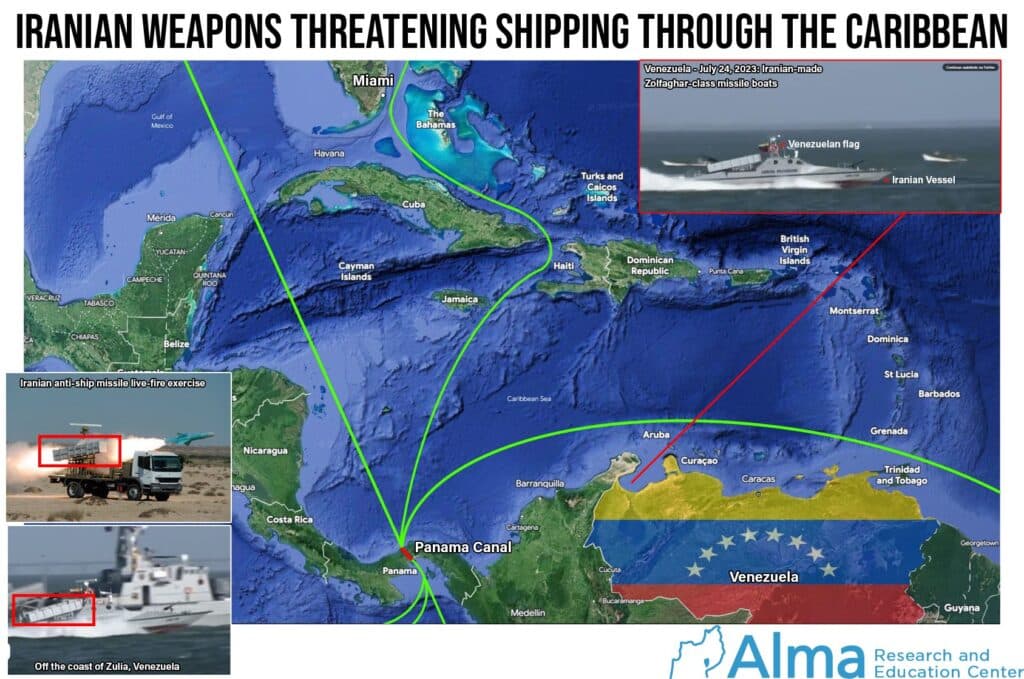
The seizure of the Venezuelan “Skipper” supertanker by US forces in the Caribbean on 10 Dec 2025 sets a new precedent for future action against the Maduro regime and its support from Iran in particular. At the time of the Skipper’s interdiction, it was transporting at least 1.1 million barrels of crude to Cuba, but the Skipper has been under sanctions since 2022 “due to its involvement in an illicit oil shipping network supporting foreign terrorist organizations,” AG Pam Bondi announced. But should maritime interdiction be restrained to only the seizure of oil?
Iran’s ongoing transfers of advanced anti-ship missiles to Venezuela (since 2023), mounted on Iranian-supplied fast boats, are in direct violation of UN Security Council Resolution 2231’s arms export curbs. These weapons pose direct threats to U.S. and allied shipping lanes, heightening regional instability. The recent maritime interdiction success validates proactive enforcement. Restoring safety and security to the western hemisphere will require designating missile-laden shipments to Venezuela as actionable threats and authorizing stop-and-search operations on Iran’s “shadow fleet” vessels to cut off Venezuela’s arms supply from Iran.




One Response
Dear Tal,
Good reporting.
The intentional interdiction of ALL terrorist oil, fuel, weapons, funds, and materials used to produce weapons, ANYWHERE on the open seas should be subject to PERMANENT and IMMEDIATE SEIZURE!!!
So let it be done.