
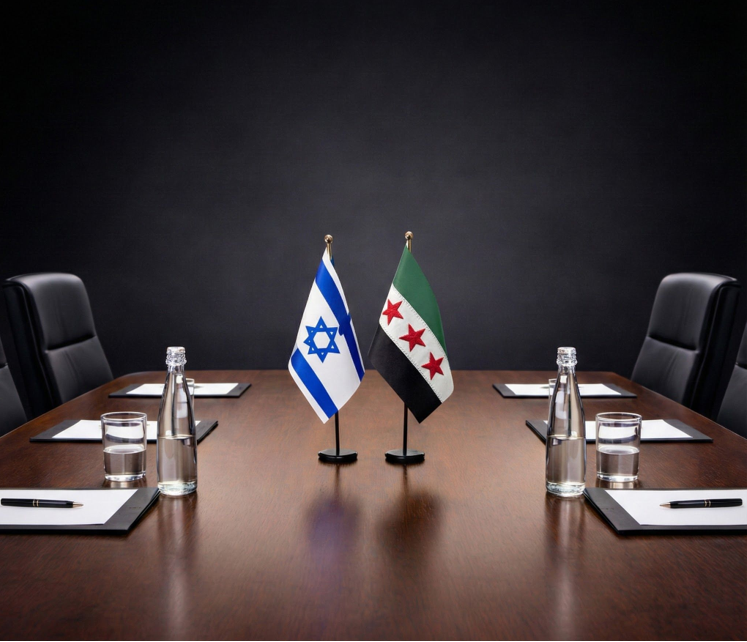
On January 6, the United States Department of State issued a joint statement announcing that Israel and Syria had reached an understanding on the “establishment of a joint mechanism to enable communication, coordination, and cooperation in the fields of security, intelligence, and commercial opportunities.”
According to the statement, the mechanism is intended to serve as a platform for resolving disputes, with the aim of preventing misunderstandings and escalation, as well as promoting confidence-building measures and diplomatic ties between the parties. According to reports, Israel allegedly also agreed to suspend its military activity in Syria; however, at present, there is no official confirmation of this, in addition Israel is not withdrawing from the buffer zone.
If the statement is translated into practice, it would de facto constitute a political agreement between Israel and Syria, intended to advance security and economic cooperation between the two countries—provided that the mechanism functions effectively and meets Israel’s security needs. Nevertheless, this development should be examined in the broader context of the nature of the Syrian regime (a leadership that emerged from an Islamist rebel movement, with a significant portion of its senior figures carrying a distinctly jihadist past) and the Syrian regime’s internal situation (instability as a form of stability).
The Syrian regime has undergone and continues to undergo a process of rebranding, attempting to present itself as a pragmatic regime that has abandoned jihadist ideology; however, this does not erase the ideological foundations from which the regime emerged.
The regime in Syria faces significant internal security challenges: tensions and violence among minority groups; demands for autonomy by various communities (including Kurds, Druze, and Alawites); a lack of effective control over the security forces and the army—largely composed of rebranded militias, some of which adhere to an extreme Salafi-jihadist ideology—as well as terrorist activity and efforts by internal actors and external players to undermine the regime’s stability.
In this context, in the last few weeks a significant escalation in fighting has taken place in the northern neighborhoods of the city of Aleppo (al-Ashrafiyah and al-Shaykh Maqsoud) between Kurdish forces and regime forces. In addition, there are daily exchanges of fire with the Druze militia in Suwayda and incidents in the Alawite coastal region.
A credible security agreement requires effective enforcement capabilities, governance, and internal state authority—conditions that do not yet exist in Syria. Consequently, it is likely that the regime will struggle at this stage to fully meet Israel’s security requirements. Accordingly, Israel should, for the time being, preserve its freedom of military action as necessary, while remaining open to coordination with Syrian security forces should genuine willingness for cooperation be demonstrated.
That said, it should be noted that since coming to power, the Syrian regime has shown a certain capacity and willingness to address arms smuggling, drug trafficking, and terrorist activity. There are even a few isolated examples of such efforts in southern Syria, though not in areas adjacent to the buffer zone and the border. In this context, opening channels of communication, coordination, and intelligence cooperation between Israel and Syria could contribute to improving Syria’s strategic and operational capabilities and to strengthening stability and security in the border area.
Targeted cooperation between Israel and the Syrian regime regarding the Druze population in southern Syria could also help reduce tensions by strengthening the local population’s sense of security and addressing both Israeli demands and humanitarian and security needs.
It should be noted that on January 9, Defense Minister Israel Katz issued a statement in the Syrian context emphasizing Israel’s security doctrine and its stance toward the Druze. Israel’s new defense concept following the events of October 7 stipulates that the IDF will serve as a buffer between jihadist organizations and forces operating within the Syrian security forces, elements of the Shiite axis, and Palestinian terrorist groups (Hamas and Palestinian Islamic Jihad), on the one hand, and the Israeli border and communities on the other. To implement this defense concept, the IDF controls the peak of Mount Hermon and the buffer zone, from which it protects the communities of the Golan Heights and the Galilee against threats of infiltration and terrorism. In addition, Israel guarantees the safety and security of the Druze in Syria and will not allow any harm to them.
It is clear that in order to preserve international legitimacy, Israel must cooperate with the diplomatic process of forging an agreement with Syria, which is being led by the United States. However, such cooperation should be conducted in a very gradual and limited manner, contingent upon clear evidence of intent and the sustained, long-term implementation of confidence-building measures by the Syrian side, while maintaining Israel’s freedom of security action. The Syrian regime now faces an opportunity to demonstrate that it is not content with projecting a pragmatic image and issuing declarations about stability and regional peace, but is instead capable of and willing to meet its commitments and take concrete steps to advance security along the border and throughout the region.
It should be borne in mind that in the jihadist sphere, political pragmatism does not contradict adherence to long-term objectives, but sometimes serves as a means of achieving them. Israel must take into account the profound conceptual gap between how agreements are perceived in the Western world versus how they are perceived in the jihadist–Islamist world.
The risk of future escalation has not been eliminated. Israel is required to ensure that any arrangement does not strengthen or entrench a new threat along the Syrian border.
Any arrangement must safeguard Israel’s strategic interests and the Israeli communities near the border with Syria, even if this includes maintaining a presence at positions and outposts within Syrian territory.



One Response
Dear Dr Zoe,
This reminds me of when Israel was coaxed into a bag with the “reformed terrorist” yasser arafat who was later discovered still to still be yasser arafat the Terror Rat! After promoting years of terror bombings, countless deaths of innocents, he later died a billionaire after stealing from his victims. Al Jolani is a bigger snake, aligned with an even bigger muslim brotherhood snake (his mother in turkey). Beware! These snakes are only waiting for a good opportunity to strike and inject their deadly poisonous venom. Before any agreements are signed they must first renounce their allegiance to violent and opressive sharia law. Otherwise, no deals with death cult terrorist oppressors can even be considered. They must change their ideology, not just their clothing.