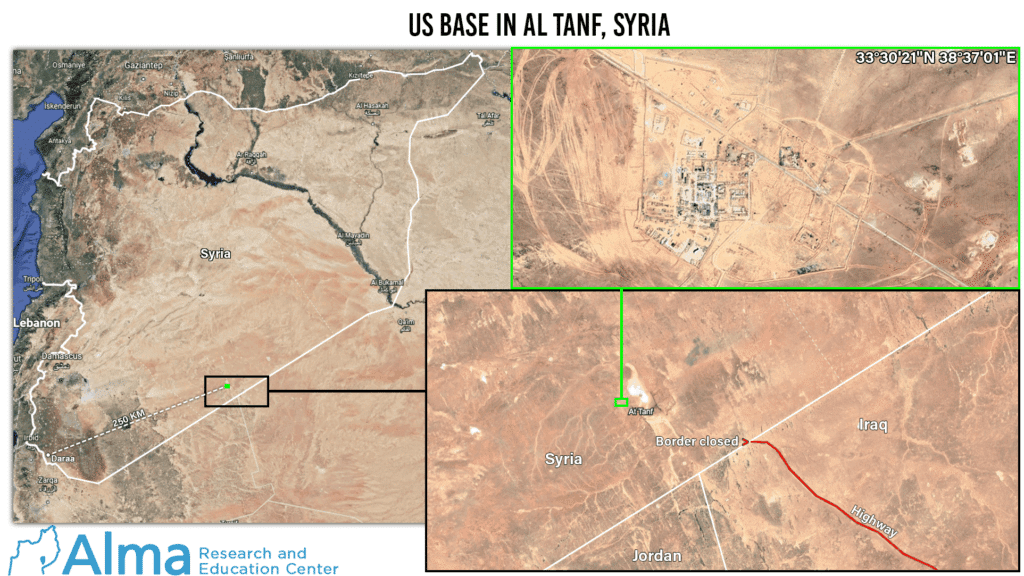
Follow-up to reports of the withdrawal of US forces from the Al-Tanf base. Originally, the main objective of the US forces in Al-Tanf was to operate against ISIS in this area. The base is strategically located in the border area between Iraq, Jordan, and Syria. With the establishment of the Iranian land corridor infrastructure in 2017, the physical location of the Al-Tanf base, along Highway 2M, and the large geographical area surrounding it, which the Americans defined as a security zone, disrupted the potential Iranian supply corridor lines in this area during the Assad regime’s rule. By controlling this key crossing point, the US prevented the use of the short route through the Iranian land corridor to southern Syria and Lebanon. The Iranian threat did not disappear with the demise of the Assad regime; on the contrary, the Iranians appear to be continuing their attempts to destabilize the region, with a focus on southern Syria, and are seeking to rebuild their terrorist infrastructure in the area (together with Hezbollah). The American presence in Al-Tanf was of significant importance in disrupting Iranian activity, which will be greatly aided by the short distance (250 kilometers) between Iraq and southern Syria. The US presence also prevented Iraqi Shiite militias from moving from Iraq to southern Syria along this route. The small size of the base, which housed about 200 American soldiers, belies its enormous strategic value, as it provides intelligence, surveillance, and rapid response capabilities. Permanently relinquishing American control of the Al-Tanf area would cause more harm than good from the perspective of American and Israeli national security, as well as that of the new Syrian regime.