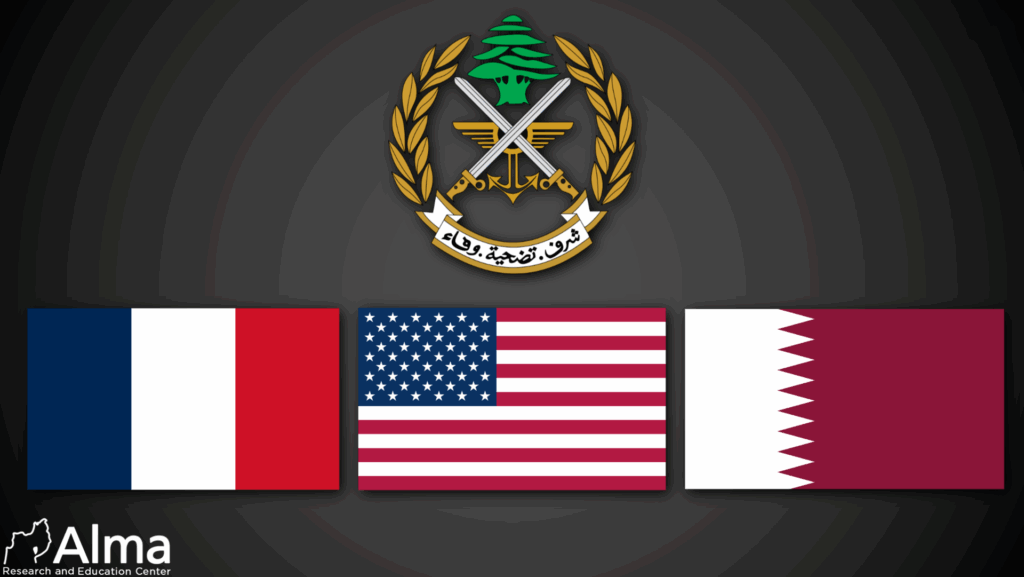
In recent years, Lebanon has undergone a process of institutional disintegration and economic collapse, which has placed the Lebanese Armed Forces (LAF) fighting not for the defense of borders, but for its very physical and institutional survival.
The economic crisis, which wiped out about 95% of the value of the Lebanese Lira, eroded the wages of soldiers and officers to a level that does not allow for basic subsistence, and led to a tangible danger of mass desertions and the disintegration of discipline.
The international aid array crystallized around the LAF in response to this crisis. Aid to the LAF underwent a dramatic paradigm shift: from a traditional focus on force buildup, training, and procurement of weaponry, to a model of “livelihood support” designed to provide a basic social safety net for soldiers.
The Evolution of American Aid: From Force Buildup to Institutional Rescue
The United States is the largest, most consistent, and most significant donor to the Lebanese Army, based on a strategic perception that views the LAF as the “sole legitimate defender” of Lebanon’s sovereignty and a counterweight (even if extremely limited) to the influence of Hezbollah and Iran.
Since 2006, the US has invested over $3 billion in security assistance to Lebanon.
The basic assumption of the Lebanese Army’s central supporters in the US (as well as in France and Britain), whereby the Lebanese Army can serve as a counterweight to Hezbollah, is fundamentally flawed. This assumption ignores ongoing trends in Lebanon and the army, and ignores the policy of containment and cooperation of the Lebanese Army with Hezbollah for many years, including in these very days.
American aid has focused on improving the army’s combat capabilities, with an emphasis on counter-terrorism (mainly against ISIS threats on the Syrian border) and border security. This aid included:
Advanced Combat Equipment: Supply of light attack aircraft of the A-29 Super Tucano type, Huey II helicopters, and Bradley APCs.
Armament: AGM-114 Hellfire missiles (precision air-to-ground missiles) and TOW 2A anti-tank missiles, designed to grant the army a tactical advantage against armored threats or fortified targets.
Mobility: Supply of over 130 armored HMMWV vehicles (Humvees) and tactical trucks, essential for moving forces in Lebanon’s mountainous terrain.
Training: The IMET (International Military Education and Training) program has trained over 6,000 Lebanese officers and soldiers in the US since 1970, with an annual investment of about $3 million. The goal of this program is not only professional but also cultural – creating a command cadre with a Western orientation and an understanding of NATO doctrines.
The economic collapse forced Washington to take an unprecedented step in January 2023. US law generally prohibits direct payment of salaries to foreign soldiers.
However, the fear of the army’s collapse led to the creation of a unique bypass mechanism in cooperation with the UN.
The US launched the “Livelihood Support Program” worth $72 million. The program was designed to provide a monthly salary supplement of $100 to every eligible soldier and police officer for six months.
Implementation Mechanism: The funds were not transferred directly to the Lebanese Ministry of Finance (for fear of corruption or confiscation), but were managed through the United Nations Development Program (UNDP). The UNDP contracted with a local financial services provider that executed the fund transfers to the soldiers.
Data from 2024 indicates continued American commitment, despite internal political pressures in the US and criticism regarding “wasted funds” in a country controlled de facto by Hezbollah and Iran.
Foreign Military Financing (FMF): In 2024, FMF commitments stood at about $132.9 million.
This amount is intended for the procurement of equipment, spare parts, and ongoing maintenance of existing American systems.
Response to the “Swords of Iron” War and the Northern Conflict: In January 2025, against the backdrop of the war and the need to implement new security arrangements in southern Lebanon, the US announced the expansion of security aid totaling over $117 million more. This aid is focused specifically on the army’s ability to deploy forces in the south and “exercise its sovereignty” in the face of new challenges.
Qatar – The Financial ‘Oxygen’
While the US supplies the heavy equipment, Qatar has entered the niche of ‘immediate resuscitator.’ Against the backdrop of Saudi Arabia and other Gulf states distancing themselves from Lebanon (due to frustration with the takeover by Hezbollah and the Shiite axis, which pushed aside the involvement of the moderate Sunni-Arab Gulf camp), Qatar—leading the Sunni Islamist axis together with Turkey and cooperating with Iran on several levels—identified an opportunity to expand its influence through targeted’ checkbook diplomacy.’ Qatar positions itself as a “neutral” mediator, capable of communicating with all parties, and aid to the army is a central pillar of this strategy.
One of Qatar’s most significant moves was the decision to directly fund soldiers’ salaries in cash.
While American aid was time-limited and required complex mechanisms, Qatari aid was direct and fast.
- The $60 Million Package (2022): In June 2022, Qatar announced a donation of $60 million to support LAF soldiers’ salaries. The funds were distributed in payments of $100 per soldier per month.
- Extensions and Renewals: This aid was not one-time. In July 2024, an additional package of $20 million was transferred, and in April 2025, in a meeting between the Emir of Qatar and Lebanese President Joseph Aoun (and former LAF commander), the commitment was renewed with an additional package of $60 million.
- The Significance for the Ordinary Soldier: For a soldier whose basic salary eroded to about $30-50 per month, the Qatari supplement of $100 constituted, in effect, the majority of his income. Thus, Qatar became, de facto, the central employer of Lebanese Army soldiers, a situation creating a deep and unprecedented dependence of a sovereign army on a foreign state with an agenda that supports the extremist ideology of the Muslim Brotherhood, and one of the central supporters of Hamas in the Gaza Strip.
Besides money, Qatar supplies the physical resources that allow the army to operate and eat.
- Food: In July 2021, Qatar began supplying 70 tons of food monthly to the Lebanese Army, after the army was forced to remove meat from the menu due to its costs.
- Fuel: The fuel shortage in Lebanon paralyzed the army’s patrol capability. In August 2023, the Qatar Fund for Development (QFFD) signed an agreement to supply fuel worth $30 million for six months.
- Ongoing Shipments: Fuel aid continued into 2024 and 2025. In October 2024, a first batch of gasoline arrived at the Port of Beirut, and in January 2025, an additional 6,100 tons were supplied, joining the 19,500 tons supplied in 2024. This supply is particularly critical in light of the requirement for the army to increase its presence in southern Lebanon and conduct joint patrols with UNIFIL.
France – The Diplomacy of Fundraising and Qualitative Aid
France, by virtue of its historical ties with Lebanon (as a former mandate) and strategic interests in the Eastern Mediterranean, took upon itself the role of international ‘coordinator.’
French President Macron led a series of international conferences designed to mobilize the world to save Lebanon, with an emphasis on preserving the army as a functioning institution.
- Paris Conference (October 2024): In this conference, pledges totaling about $1 billion were raised for aid to Lebanon, of which about $200 million were designated directly for security forces.
- The French Message: Paris emphasizes that strengthening the Lebanese Army is a necessary condition for implementing Resolution 1701 and preventing total war, and that the army must be capable of deploying forces in the south and preventing arms smuggling.
Direct French aid focuses on specific niches complementing American and Qatari aid:
AFV (Armored Fighting Vehicle): France supplied dozens of APCs of the VAB (Véhicule de l’Avant Blindé) type.
These vehicles are essential for the protected mobility of infantry forces, especially in friction zones in southern Lebanon.
Medicine and Logistics: The French Ministry of Defense established a program for the joint procurement of medicines and medical equipment for the army at discounted prices, understanding that the army’s health services have collapsed.
Engineering Equipment: In November 2024, France supplied (in cooperation with Cyprus) heavy engineering equipment and spare parts for APCs, designed to assist in rehabilitating roads and infrastructure damaged in fighting, to enable movement of forces.
Table 1: Comparison of Aid Profile of the Three Major Donors (2021–2025)
| Parameter | United States | Qatar | France |
| Main Aid Type | Military Financing (FMF), Training (IMET), Combat Equipment | Cash for Salaries, Fuel, Food | Logistical Equipment, AFVs, Diplomacy |
| Transfer Mechanism | FMS (Gov to Gov), UNDP (for salaries) | Direct (Cash), QFFD (Development Fund) | Direct, International Conferences, EPF |
| Notable Amounts | Over $3 billion (cumulative); $72 million for salaries (2023) | $60+$20+$60 million for salaries; $30 million for fuel | ~$200 million (conference fundraising); ongoing equipment donations |
| Main Equipment | Aircraft (Super Tucano), Missiles (Hellfire), Humvees | Fuel (Gasoline/Diesel), Food, Light Vehicles | VAB APCs, Medical Equipment, Spare Parts |
| Strategic Motive | Building counterweight to Hezbollah, Enforcing 1701 | Regional Influence, Filling Sunni Vacuum, Mediation | Historical Tie, Middle East Stability, Preventing Migration |
Table 2: Breakdown of Salary Aid Packages (“Livelihood Support”)
| Year | Donor | Amount | Target Audience | Implementation Mechanism |
| 2022 | Qatar | $60 million | All Army soldiers | Direct payment ($100 per soldier) |
| 2023 | US | $72 million | Army (LAF) and Police (ISF) | Via UNDP (Third-party provider) |
| 2024 | Qatar | $20 million | Army soldiers | Direct payment |
| 2025 | Qatar | $60 million | Army soldiers | Direct payment |
The Internal Challenge – Demographics, “Shiite-ization,” and Dual Loyalty
While international aid focuses on preserving the institutional framework of the Lebanese Army, recent studies reveal deep demographic changes within the army, placing a big question mark on the effectiveness of the aid in achieving its strategic goal: creating a counter-force to Hezbollah.
Reports by the Alma Center indicate that the sectarian composition of the army has changed dramatically in recent years.
The Data: While the division in the high command remains balanced (Maronite commander), among the combat echelon and officer corps, estimates speak of about 50% of the fighting force being Shiites.
The Shiite dominance in the field ranks creates an acute loyalty dilemma.
Family Ties: Many soldiers are relatives of Hezbollah operatives.
The chance that a soldier will enforce authority (or open fire in an extreme case) on his cousin or neighbor in the village is low to non-existent.
Cooperation in the Field: In southern Lebanon, the critical zone for implementing Resolution 1701, cooperation between the army and Hezbollah is daily.
Reports indicate that officers and soldiers cooperate with the organization (the army is penetrated by Hezbollah), coordinate activity with Hezbollah, and turn a blind eye to Hezbollah’s activity.
The Lebanese Army will not reach closed (military) zones of Hezbollah and will not enter houses where much Hezbollah weaponry is stored.
The Significance for Donors: The situation creates a paradox for the US and France. They are arming an army where a significant portion of its soldiers might, at the moment of truth, refuse an order or even transfer information and equipment to Hezbollah.
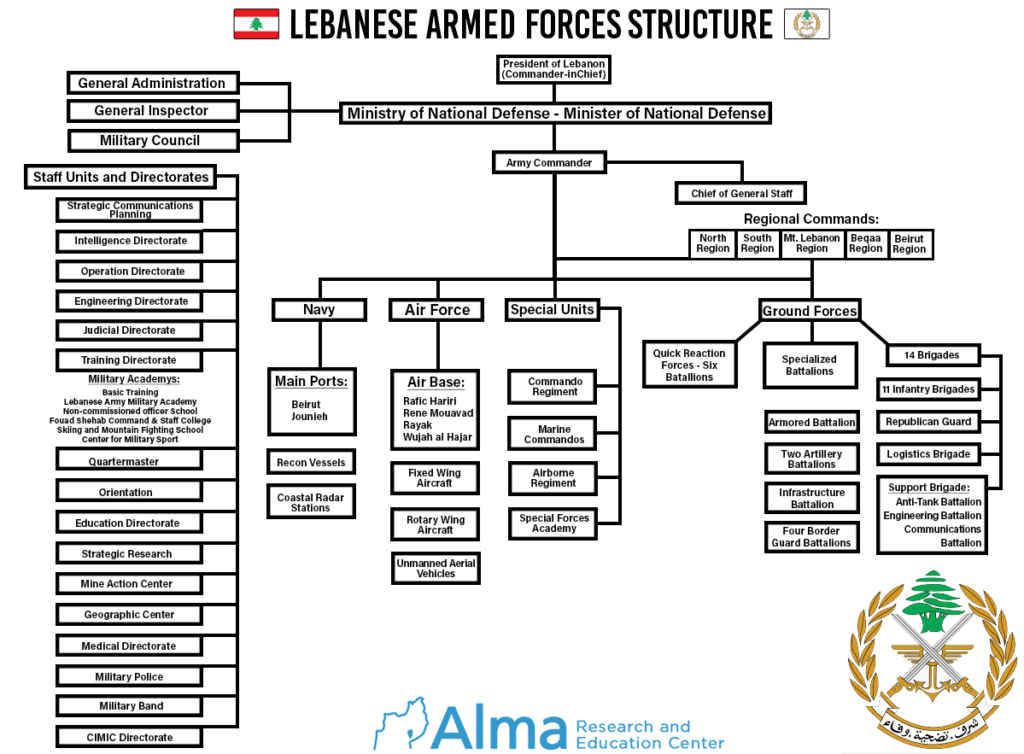
Conclusion and Outlook: Scenarios and Implications
The aid array to the Lebanese Army reveals a grim situation report of an institution found on constant ‘life support machines.’
International aid has succeeded, so far, in preventing the army’s disintegration, but has failed to transform it into a force capable of dealing with Lebanon’s central security challenge – Hezbollah.
The Lebanese Army has lost its economic independence. It depends on Qatar for salaries, on the US for equipment, and on France for logistics. This dependence turns the army commander into a diplomatic figure fundraising money more than a military commander. Qatar’s rise as a key player through salary funding grants it a tremendous lever of influence in Lebanon, filling the void left by Saudi Arabia. This is a soft and negative influence in light of Qatar’s agenda in the Middle East.
The “Shiite-ization” of the army is the most worrying trend for the West and Israel.
It raises doubts regarding the army’s ability to serve as an effective buffer force in southern Lebanon on the day after the war.
On the other hand is Qatar’s influence, a Sunni influence striving to establish its extremist Sunni ideology.
There exists a clear potential danger where the existing distinct majority of Lebanese Army soldiers and officers (over 80 percent at least) based on Shiite and Sunni Muslims, will be under the influence of extremist Muslim ideology: Shiite on one hand and Sunni on the other.
It is reasonable to assume that aid will continue and even increase, since the alternative – total chaos in Lebanon – deters the West more than the Lebanese Army’s inefficiency.
However, expectations from the army need to be realistic: it can serve as a policing and public order maintenance force, but is incapable, and unwilling, to disarm Hezbollah by force of arms.
Looking to the future, any political arrangement in Lebanon will have to take into account that the Lebanese Army is not a normal army, but a fragile coalition of sectarian interests held together by foreign dollars.