

Lebanon’s “Creative Solution”: Not an Ambassador, but an “Iranian Citizen”
Overview
Lebanon has found an administrative-political solution that allows Mohammad Reza Raouf Sheibani, Iran’s ambassador-designate to Lebanon, who was declared persona non grata, to remain in the country (for details on the background to the diplomatic crisis and on Sheibani, see below).
On August 24, 2026, when Sheibani’s diplomatic entry visa expired, the Director General of Lebanese General Security, Hassan Choucair, granted him a six-month residence permit as an “ordinary Iranian citizen” (for details on Choucair and Lebanese General Security, see below).
Sheibani submitted the application using an ordinary Iranian passport rather than the diplomatic passport he had used upon arriving in Lebanon. The permit was granted under Article 21 of Legislative Decree No. 10188 of July 18, 1962, which authorizes the Director General of General Security to grant “courtesy residence permits” and handle special cases. The permit does not confer diplomatic status or immunity on Sheibani, nor does it grant him any official authority to represent Iran.
According to several reports, Sheibani personally visited the offices of Lebanese General Security to regularize his status. However, the wording of the published report confirms only that the application was submitted to the offices of Lebanese General Security and does not make it possible to determine conclusively whether Sheibani appeared there in person.
In practice, the Lebanese state did not expel Sheibani; it merely changed the designation attached to his name. Sheibani did not leave Lebanon or submit a new entry application from Iran. He remained in Beirut, changed the type of passport used to submit the application, and obtained an alternative residency arrangement.
Despite the opposition of Lebanese Foreign Minister Youssef Rajji, the Al-Modon news website reported that the arrangement had received the approval of President Joseph Aoun, Parliament Speaker Nabih Berri, and Prime Minister Nawaf Salam. However, no joint official statement was issued on their behalf.
Did Choucair act independently, or was he implementing a compromise that had received high-level political backing?
The Implications: A Sovereign Decision on Paper, a Retreat in Practice
Iran may have lost the ability to present Sheibani as its formal ambassador, but it achieved the more important practical outcome: a veteran diplomat with intimate knowledge of the Lebanese and Syrian arenas—who has been under sanctions since May 2026 for assisting Hezbollah (see details below) remains in Beirut.
Sheibani lost his immunity and the right to represent Iran officially, but he did not lose his connections, experience, or access to the power centers of the Iranian axis. Lebanon preserved its decision to exclude him on paper while simultaneously providing the mechanism that allowed it to be circumvented in practice.
This is yet another trick from the Lebanese playbook, carried out under the auspices of the Shiite director of Lebanese General Security.
The Shiite Connection
According to several reports, Nabih Berri, leader of the Amal Movement and Speaker of Parliament, effectively opposed the Lebanese state’s decision to declare Iran’s ambassador-designate persona non grata and asked him to remain in the country.
Ultimately, it was Hassan Choucair—the Director General of General Security, a Shiite from southern Lebanon who is considered affiliated with the Amal Movement and a protégé of Nabih Berri—who exercised his authority and granted Sheibani a residence permit.
Does this once again suggest that Berri is not part of the solution, but part of the problem?
Who Is Hassan Ezzat Choucair?
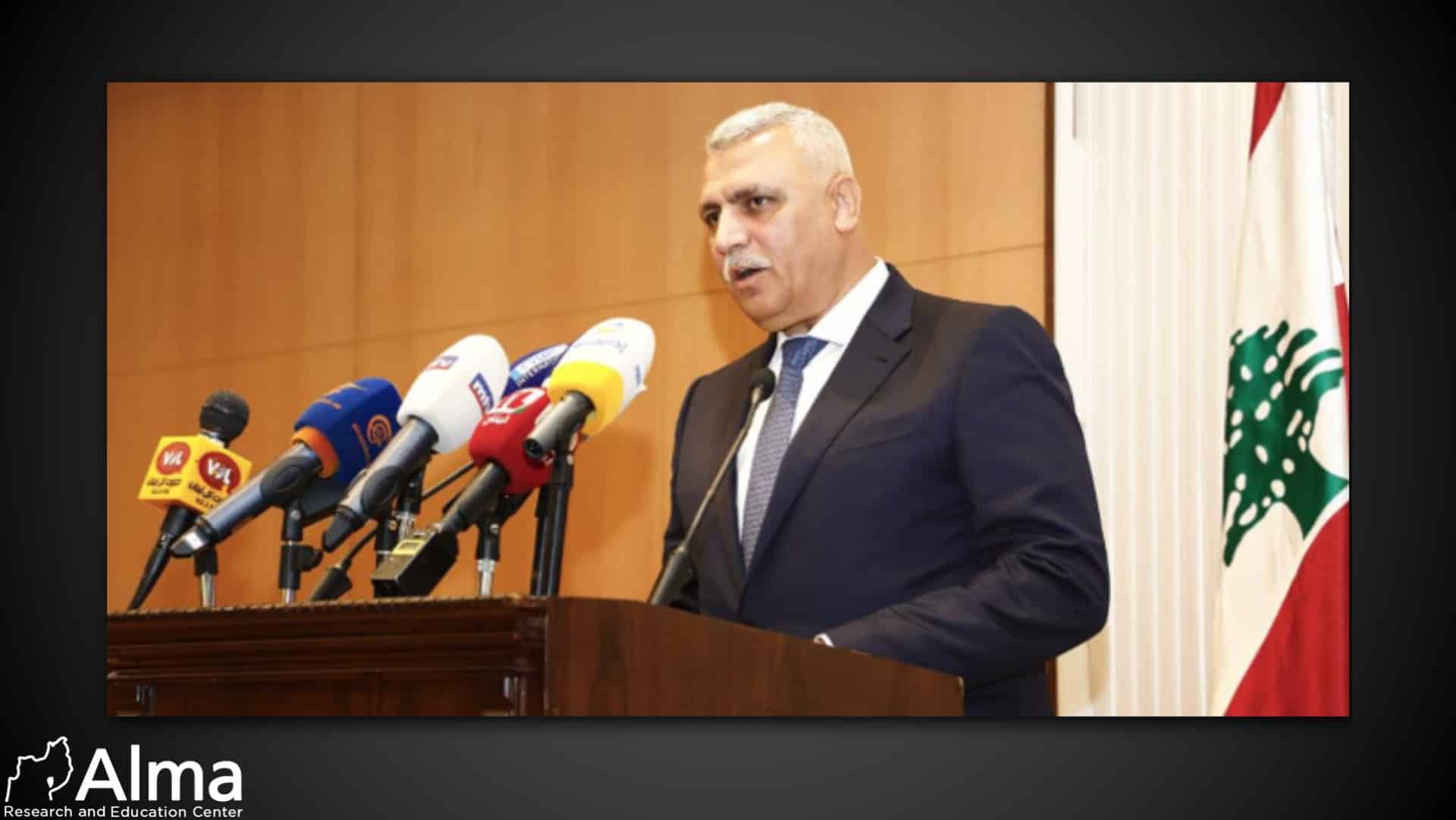
Hassan Ezzat Choucair is a Shiite Muslim, born on August 9, 1966, in the town of Mays al-Jabal in the Marjayoun District of southern Lebanon.
He enrolled in the Military Academy in 1992, initially serving in the Lebanese Army’s artillery corps. He later held positions in Lebanese Army Intelligence and in investigations and security operations in Beirut and southern Lebanon.
In March 2022, he was appointed Deputy Director General of State Security. In March 2025, he was transferred to Lebanese General Security and appointed its Director General.
Before his appointment as Director General of General Security, Choucair was also involved in liaison with Iraq. In February 2025, Prime Minister Nawaf Salam sent him to Baghdad on a mission that included securing the continued supply of Iraqi fuel to Lebanon.
There have also been reports and allegations of his earlier ties with figures close to Iraq’s Shiite militias and with Hezbollah.
Background – From a Diplomatic Crisis to a Political Compromise
In early 2026, Iran appointed Shibani as its ambassador-designate to Lebanon, replacing Mojtaba Amani. However, Shibani did not manage to present his credentials to President Joseph Aoun and therefore officially remained an “ambassador-designate” rather than an accredited ambassador.
On March 24, the Lebanese Ministry of Foreign Affairs announced that it was withdrawing its preliminary approval of his appointment, declared him persona non grata, and demanded that he leave the country by March 29, 2026. The decision was attributed to violations of the rules governing diplomatic activity, interference in Lebanon’s internal affairs, and meetings with Lebanese figures without coordination with the Foreign Ministry. At the same time, Lebanon’s ambassador to Tehran was recalled for consultations.
Hezbollah condemned the decision, claiming that it lacked a legal basis and had been made in response to foreign dictates. Iran announced that Shibani would not leave and would continue his work. According to Lebanese reports, Parliament Speaker Nabih Berri also asked him to remain. The deadline for his departure passed, but Shibani did not leave, and the Lebanese authorities took no action to arrest or deport him.
An unusual situation therefore persisted for approximately five months: the Lebanese Foreign Ministry refused to recognize Shibani as a formally accredited ambassador and demanded his departure, while the state’s other institutions refrained from enforcing the decision.
As Shibani’s visa approached its expiration date, Lebanese Foreign Minister Youssef Rajji reiterated his opposition to renewing it or regularizing the Iranian ambassador-designate’s status under a different designation. According to Rajji, once a diplomat is declared persona non grata, any visa or previous permit allowing him to remain in the country is no longer valid.
Mohammad Reza Raouf Sheibani
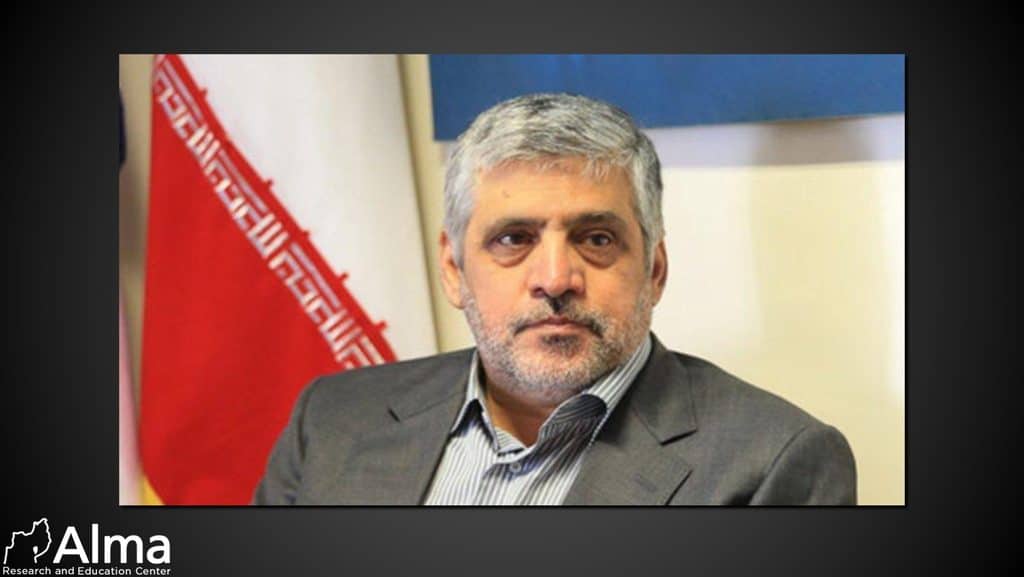
Sheibani is not an ordinary Iranian diplomat. He previously served as Iran’s ambassador to Lebanon from 2005 to 2009, a period that included the withdrawal of Syrian forces from the country, the Second Lebanon War, Hezbollah’s growing strength, the events of May 2008, and the Doha Agreement. He subsequently served as Iran’s Deputy Foreign Minister for Middle Eastern Affairs.
From 2011 to 2016, Sheibani served as Iran’s ambassador to Damascus precisely during the years in which Iran, the Islamic Revolutionary Guard Corps, and Hezbollah deepened their military involvement in Syria. In 2024, he was appointed the Iranian Foreign Minister’s representative for West Asian affairs. Following the fall of Bashar al-Assad’s Syrian regime, Sheibani was appointed the Foreign Minister’s special envoy for Syrian affairs in January 2025.
The sequence of positions held by Sheibani indicates that he possesses an in-depth understanding of the sphere connecting Tehran, Damascus, and Beirut. According to Lebanese reports, Iran now intends to employ him as a special envoy for Lebanese and Syrian affairs.
Iran’s designation of Sheibani as an “envoy” does not grant him immunity or official status without Lebanon’s consent. However, it may enable him to convey messages and maintain contacts with Hezbollah, the Amal Movement, and other actors outside the regular diplomatic framework.
On May 21, 2026, the U.S. Department of the Treasury placed Sheibani on its sanctions list pursuant to a counterterrorism executive order. According to the U.S. authorities, Sheibani materially assisted and provided services to Hezbollah. In OFAC’s official listing, he also appears in connection with the Islamic Revolutionary Guard Corps, Iran, and Hezbollah. U.S. Department of the Treasury
The passport used to submit his residency application was changed from a diplomatic passport to an ordinary one, but his identity and position within the Iranian system remained unchanged. Behind the administrative designation “Iranian citizen” stands a man whom the U.S. administration had identified only three months earlier as having assisted Hezbollah.
General Security
(General Directorate of General Security – GSGD)
(Al-Mudiriyya al-Amma lil-Amn al-Amm)
General Security operates under the Ministry of Interior. It was formerly known as the “First Bureau.”
The organization is responsible for intelligence gathering and counterespionage activities in all their forms—security, political, social, and economic—as well as media censorship; monitoring, handling, and supervising foreign nationals; overseeing air and seaports; and issuing travel permits, passports, entry visas, and residency permits. This is the source of its formal authority to grant the Iranian ambassador a residency permit.






One Response
Dear Tal,
Great work exposing Sheibani and his support of Hezbollah with his terrorist connections. A legal indictment should now be prepared to require that he be arrested and prosecuted for aiding and abetting with hezbollah terrorist actions both within and surrounding Lebanon. High treason would appear to be the suitable primary charge.