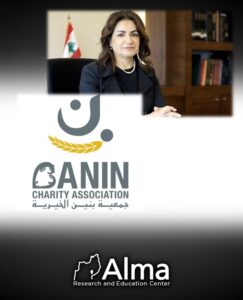
Hanin Al-Sayed serves as Lebanon’s Minister of Social Affairs. A Sunni regarded as “independent,” she was appointed on a professional, non-partisan basis. Prior to assuming office in February 2025, she spent roughly three decades (1992–2022) at the World Bank, specializing in human development and social protection. She later held a senior fellowship at the Carnegie Middle East Center (2023–2025), where her work focused on the economic and social conditions in Lebanon and Syria. Earlier in her career, she also worked at financial institutions, including Morgan Stanley and the Arab Fund for Economic and Social Development.
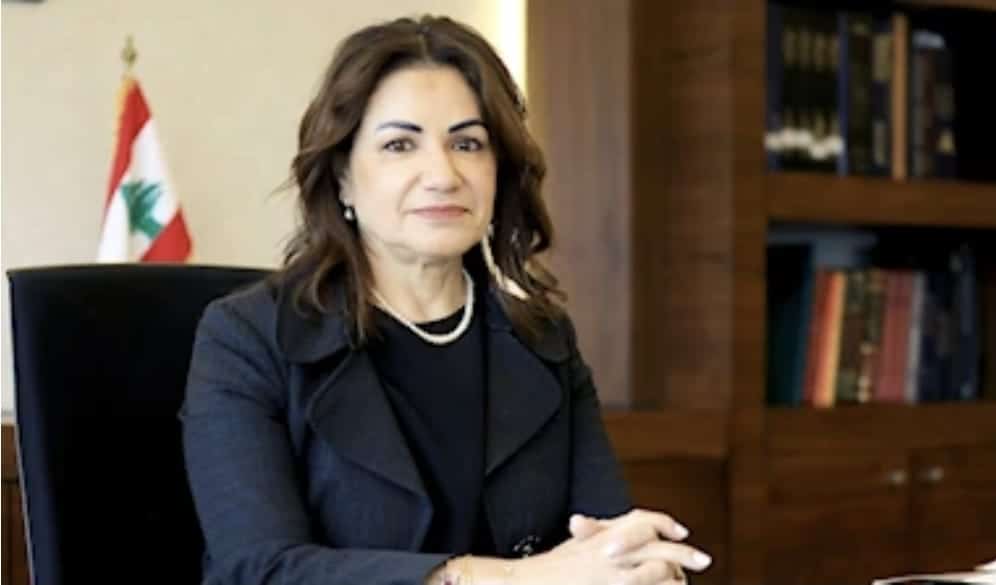
Al-Sayed lost her mother in the Beirut port explosion in August 2020. This fact is often mentioned in the context of her commitment to reforms and rebuilding the state.
During her tenure at the World Bank, Al-Sayed specialized in developing formal social protection systems for the Lebanese state—such as the ESSN (Emergency Social Safety Net) program—designed to replace the fragmented aid mechanisms operated by various organizations.
Al-Sayed is the minister in charge of the government aid centers for displaced persons (Shiites) following the war. Al-Sayed ’s ministry assigned the “Banin Charitable Association” (جمعية بنين الخيرية), headed by Mohammad Jad Bydoun, to manage the large aid center for displaced persons at the Cité Sportive in Beirut.
Who is the “Banin Charitable Association”? It is an NGO that presents itself as “humanitarian and apolitical,” yet is repeatedly linked to Hezbollah in media reports, research, and field testimonies. In studies dealing with the Shiite economy in Lebanon, the association is classified under the category of non-governmental organizations (NGOs) operating in the Shiite environment identified with Hezbollah and the Amal Movement.
On its official website, the association emphasizes its role as a non-sectarian aid provider serving all communities. In reality, however, it operates primarily in Hezbollah strongholds (Dahiya, southern Lebanon) and benefits from a level of operational freedom that is not afforded to other organizations in these areas.
A key incident that cemented the association’s perceived ties to Hezbollah was the June 2021 break-in at the Lebanese Swiss Bank in Hamra. Dozens of individuals affiliated with “Banin” stormed the branch, demanding that funds be transferred to Turkey. Contemporary reports characterized the participants either as Hezbollah operatives or as a group acting under the organization’s patronage.
Rather than establishing an effective state-run alternative for providing social services to displaced Shiites, the Lebanese government, effectively under Al-Sayed’s auspices (despite her professional background and expertise at the World Bank), is delegating this responsibility back to Hezbollah via one of its affiliated charitable organizations – “Banin.” In practice, this approach reinforces Hezbollah’s civilian infrastructure and deepens the Shiite community’s reliance on it, instead of channelling resources into a viable civilian alternative independent of Hezbollah.
Hezbollah’s civilian infrastructure underpins its military capabilities. Without substantive intervention by the Lebanese government to reduce the Shiite population’s reliance on Hezbollah, meaningful structural change in Lebanon will remain unattainable. Under such conditions, Hezbollah’s quasi-state will ultimately prevail over the Lebanese state.
Why does Hanin Al-Sayed, an expert in developing formal social protection systems intended to replace Hezbollah’s aid mechanisms, permit such an organization (“Banin”) to operate with the approval and legitimacy of the Lebanese government?