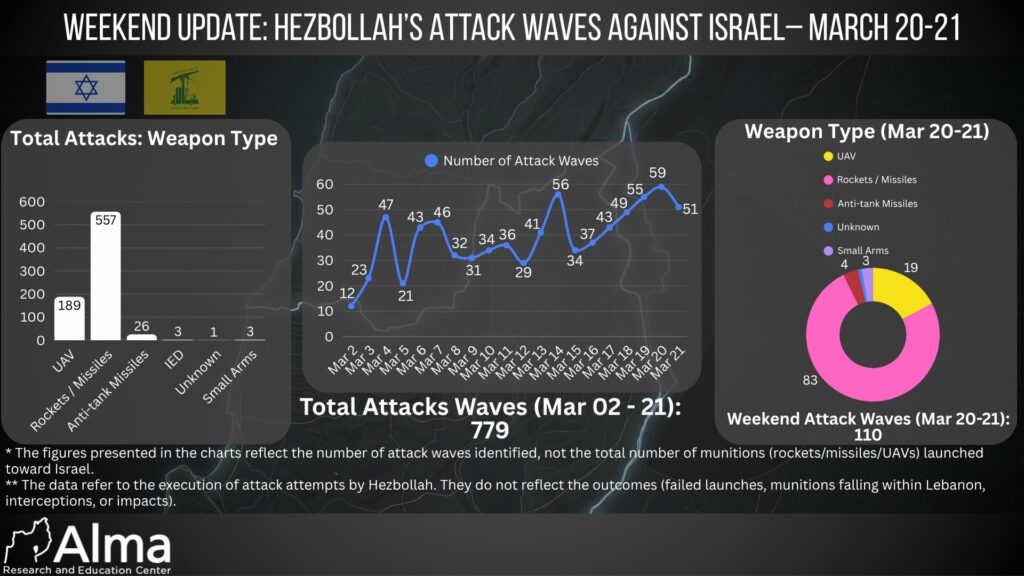
Over the weekend (March 20–21), 110 Hezbollah attack waves against Israel were identified, reflecting a continued escalation in the scope of activity, with particularly high levels of attacks on both days. In terms of weapon types, the majority of attacks were carried out using rockets and missiles (83 waves, ~75%), alongside 19 UAV attack waves (~17%), 4 anti-tank missile attacks, as well as additional incidents involving IEDs, small arms fire, and other unidentified means. It is further noted that 43 of the attacks over the weekend were claimed by Hezbollah as targeting IDF forces operating against it in southern Lebanon. According to the organization’s statements, these attacks involved a combination of indirect fire, anti-tank missiles, and UAVs, as well as three incidents involving small arms engagements. It should be noted that in many cases of fire directed at IDF forces in Lebanese territory, spillover fire toward Israeli border communities was also recorded. Geographically, most attacks were directed at border communities and the Galilee, with a focus on areas adjacent to the border, but also impacting urban areas in northern Israel, causing property damage. Hezbollah also boasted on Friday of carrying out 7 direct attacks against the city of Kiryat Shmona—a city of approximately 25,000 residents—highlighting a deliberate focus on urban centers in the north. Additionally, a direct hit was recorded on a residential building in the city of Ma’alot. Beyond the fact that Hezbollah is directly targeting civilian communities, the organization appears to be seeking a “victory image” by attempting to drive Israeli residents in border communities to evacuate. Additionally, two IDF soldiers were reported injured by mortar shrapnel. Since Hezbollah joined the fighting on March 2, a total of 779 attack waves against Israel have been identified. Trend analysis indicates that after earlier fluctuations, there is now a sustained increase in the scale of attacks, with a shift toward higher and more consistent levels of activity in recent days. *Notes: The data refer to the number of identified attack waves, not the total volume of munitions launched. Additionally, the data reflect the execution of attack attempts by Hezbollah and do not account for outcomes (failed launches, munitions falling within Lebanon, interceptions, or impacts).