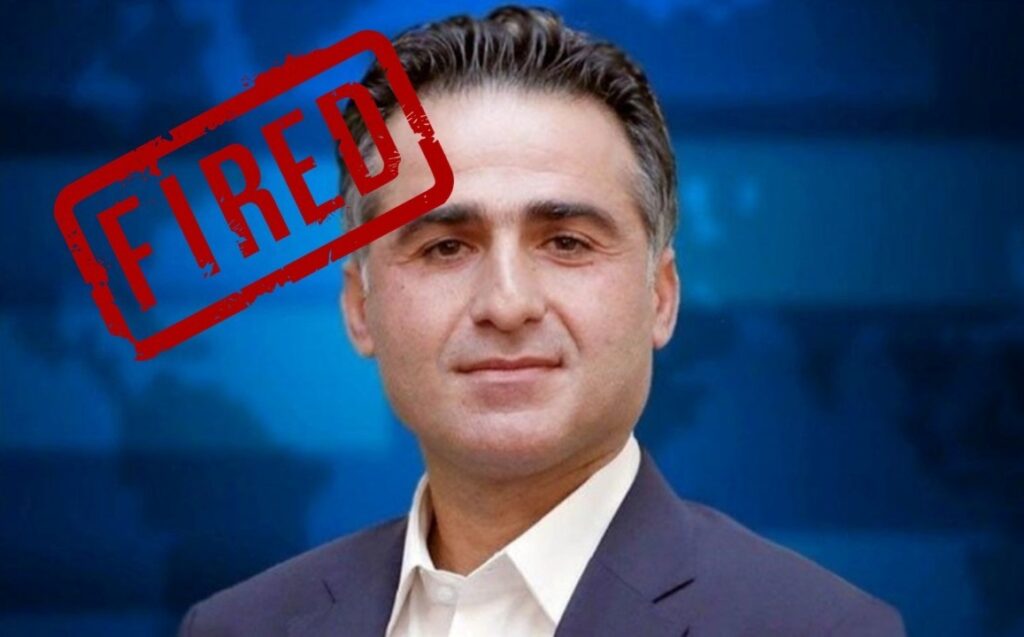
Ali Hamieh served as Lebanon’s Minister of Transport and Public Works from September 2021 to May 2025, representing Hezbollah within the Lebanese government.
Hamieh concluded his tenure as minister in early 2025 following the formation of Lebanon’s new government. However, in June 2025, he was appointed by Joseph Aoun as a senior advisor to the President of Lebanon on reconstruction affairs.
This role grants him influence over reconstruction processes, the mobilization of international aid, and the promotion of economic and infrastructure projects, particularly in light of Lebanon’s deep economic crisis. In this capacity, Hamieh has also taken part in international activities, including visits and meetings with foreign actors, among them his visit to Paris.
Ali Hamieh’s explicit association with Hezbollah raises concerns that reconstruction initiatives and international assistance could be leveraged to serve the organization’s interests, further eroding the distinction between the Lebanese state and Hezbollah. This situation unfolds under President Joseph Aoun, who appointed him.
If Lebanon’s leadership genuinely seeks to dismantle the so-called “Hezbollah state,” as it repeatedly declares, then why was Ali Hamia appointed to his current position?
Hamieh’s profile reflects Hezbollah’s broader strategy: embedding affiliated figures within key state institutions, branding them as technocrats and professionals, and utilizing state apparatuses to advance the organization’s political, logistical, and military objectives, both domestically and internationally.
In his role as Minister of Transport and Public Works, Hamieh oversaw critical national assets, including infrastructure, ports, airports, border crossings, the road network, and major logistical projects.
This portfolio is among the most sensitive and strategically significant in the government from Hezbollah’s standpoint. The ministry’s functions, and those of its leadership, bear direct relevance to arms smuggling activities and the development of Hezbollah’s military infrastructure.
Ali Hamieh should be removed from his position without delay.
Ali Hamieh is a Lebanese Shiite politician, born in 1977, from the town of Taria in the Baalbek-Hermel district. His origin is from a region considered a distinct stronghold of Hezbollah, a fact that provides important background for understanding his political trajectory and ideological affiliation.
Hamieh holds extensive academic education in the field of engineering and technology: he earned a bachelor’s degree in electronics engineering from the Lebanese University, a master’s degree in communication technologies from an academic institution in France, as well as a doctorate in electronics and communications. Over the years, he has also been active in the academic arena, including as a lecturer and researcher, and has presented himself as a technocrat and a professional figure.
Alongside his academic background, Hamieh integrated into Lebanese politics as a clear part of the Hezbollah camp. In 2018, he was elected to the Lebanese Parliament on behalf of the Loyalty to the Resistance party, Hezbollah’s political wing, and his identification with the organization is overt and undisputed. His election in this framework, reflects political loyalty to Hezbollah’s agenda and the “resistance” narrative, as well as participation in the organization’s ongoing effort to deepen its hold on Lebanese state institutions through parliamentary and governmental activity.
As part of Hezbollah’s political influence on the composition of governments in Lebanon, in 2021 Hamia was appointed Minister of Transportation and Public Works – one of the most sensitive and strategic portfolios for the organization The ministry is responsible for national infrastructure, ports, airports, border crossings, the road network, and large-scale logistical projects. Control or influence over these areas provides a significant advantage to any actor seeking to manage the movement of goods, people, and equipment, especially in a state suffering from partial enforcement and porous borders.
During his tenure as a minister in the Lebanese government, several projects with clear dual-use potential were advanced. Among them, the procurement of scanning and control equipment for checkpoints and border crossings between Lebanon and Syria in July 2023 was proposed and promoted. These moves were presented to the public as steps to improve oversight and security; however, in practice, when dealing with a border that has served as a central axis for Hezbollah smuggling, scanning systems and traffic management may also serve as tools enabling better control of the flow of goods and the concealment of illegal activity, particularly in the absence of independent oversight and effective enforcement. In this context, the Ministry of Transport and Public Works became a tool of importance for Hezbollah, enabling the organization to operate within an ostensibly state framework.
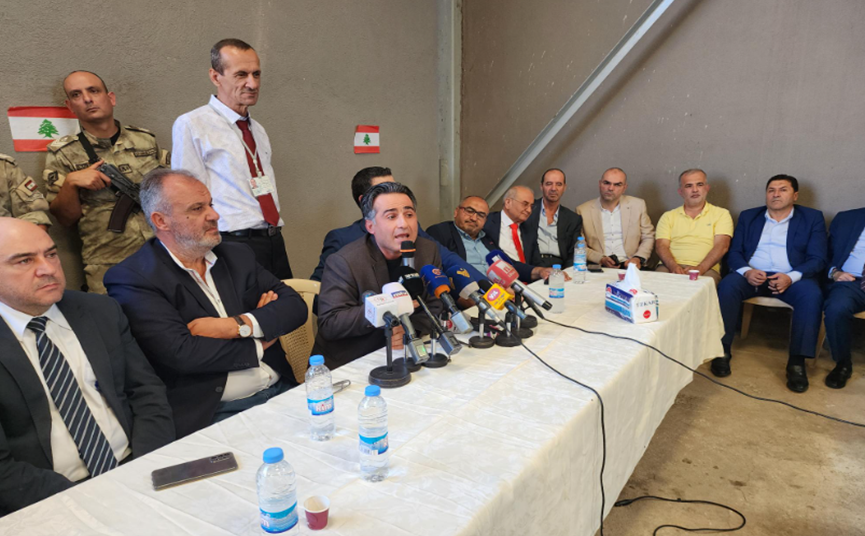
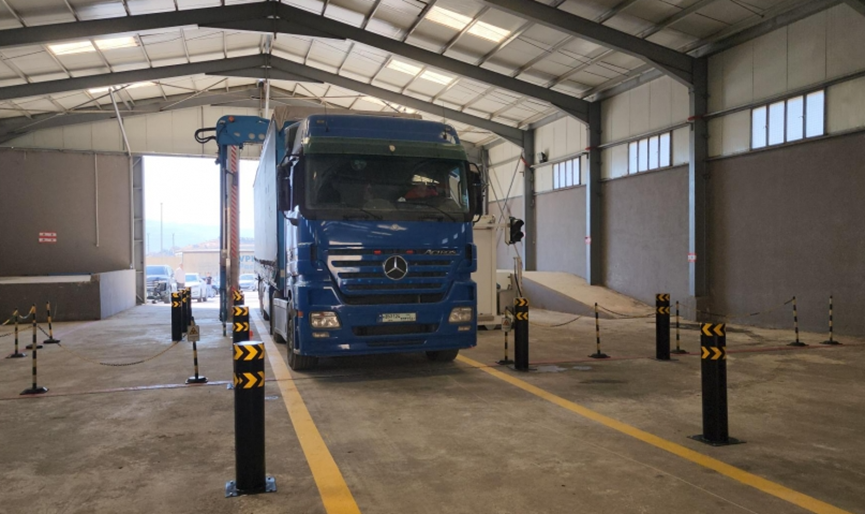
In November 2024, Ali Hamieh addressed Israeli claims that Israel had attacked or was aiming to target border crossings with Syria on the grounds that Hezbollah was allegedly transferring weapons through them. He rejected these claims, asserting that they were “accusations” without basis. He emphasized that Lebanese state mechanisms operate at the crossings (General Security, customs, military intelligence, and others), and therefore, in his view, there is no logic in questioning the state system or its ability to enforce the law and prevent illegal transfers. At the same time, he highlighted the reconstruction efforts and the reopening of crossings that had been damaged.
By virtue of his role as Minister of Public Works and Transport, Ali Hamieh promoted and marketed extensive budgetary investments in road and infrastructure projects in areas identified with the Shiite “base,” primarily southern Lebanon, presenting them as civilian efforts aimed at improving services, accessibility, and development. However, in practice, when an actor affiliated with Hezbollah holds a portfolio responsible for transportation routes, bridges, earthworks, and logistical infrastructure, such investments may also contribute to strengthening the organization’s operational freedom on the ground: facilitating the movement of people and equipment, improving connectivity between villages and routes, and deepening its grip in areas where the state is weak and the organization is dominant.
In this context, during the war in 2024, significant volumes of Hezbollah’s military infrastructure were exposed in southern Lebanon, including rocket launchers, positions, and weapons stockpiles, as well as the use of civilian spaces—including homes and buildings—for operational purposes and the concealment of weapons. These findings reinforce the understanding that the civilian sphere in southern Lebanon is not separate from Hezbollah’s military infrastructure, and that infrastructure investments, even when presented as non-political, may in practice become integrated into a broader system that supports the organization’s deployment, concealment, and logistical capabilities.
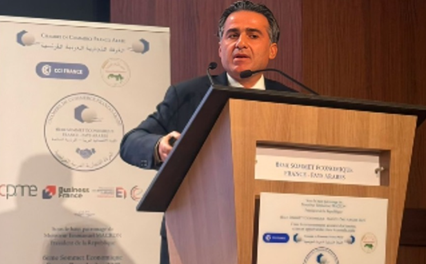
On December 11, 2025, Ali Hamieh, in his capacity as an advisor to Lebanese President Joseph Aoun on reconstruction affairs, presented in Paris, in the framework of the Sixth Arab–French Economic Summit (under the auspices of President Emmanuel Macron), an overview of the extent of the damage in Lebanon, with an emphasis on the Shiite areas in southern Lebanon and in the Dahieh, as a result of the fighting up to November 2025.