By: Colin David
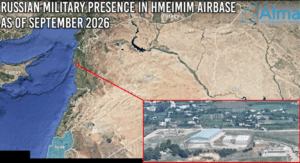
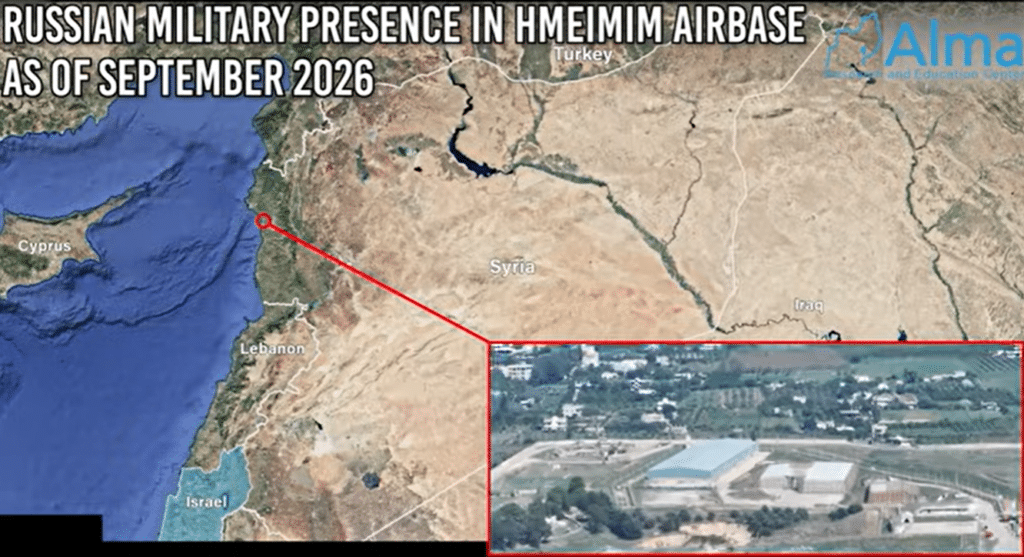
On September 15, 2026, Syrian state television released video footage of the Russian airbase at Hmeimim, located approximately four kilometers from the city of Jableh and 16 kilometers south of the port city of Latakia. According to Syrian television, this was the first footage of the base released since Syria and Russia signed a memorandum of understanding on August 9 regulating the Russian military presence at the Hmeimim and Tartous bases.
Following the arrival of Russian forces in Syria in August 2015, Hmeimim became Russia’s main military base in the country. It housed approximately 1,500 troops and contained all types of weapon systems deployed and operated by the Russian military in Syria: dozens of aircraft, including fighter jets, bombers, light and heavy transport aircraft, refueling aircraft, and intelligence aircraft; dozens of combat and transport helicopters; UAVs; air-defense systems, including the S-400; weapons depots; tanks; and numerous armored vehicles.
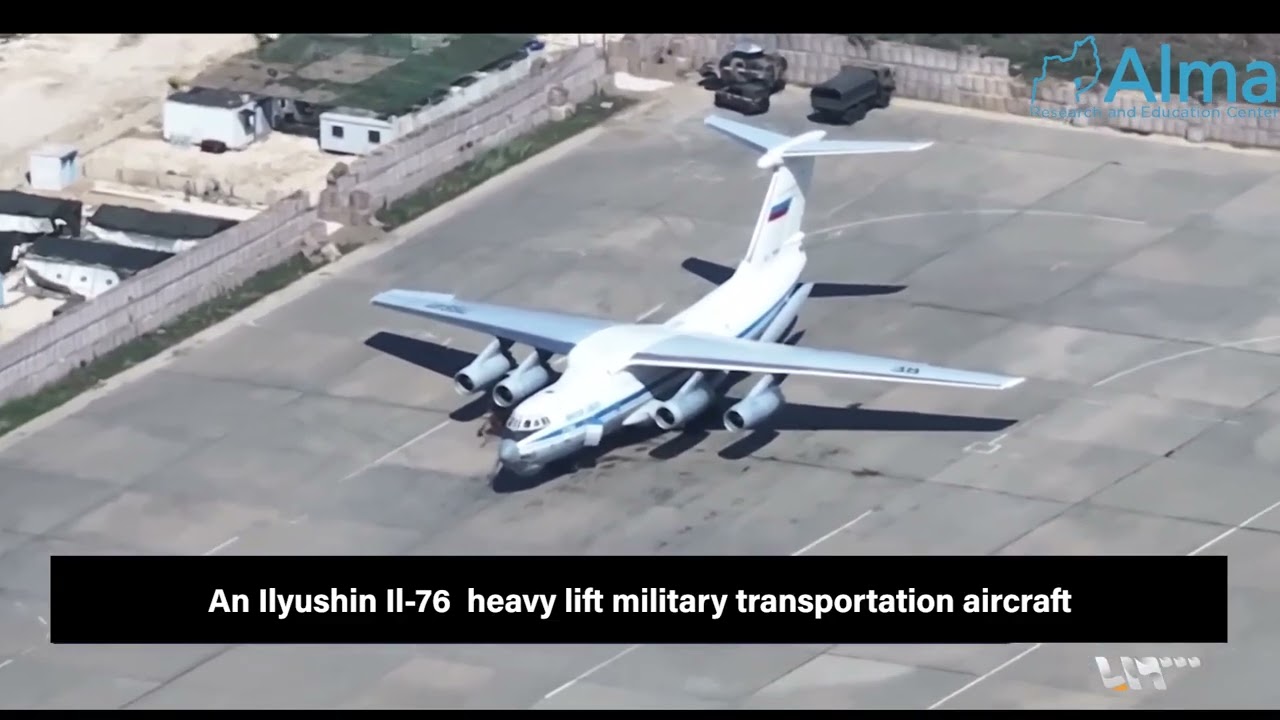
As can be seen in the accompanying video, in which we incorporated the Syrian television footage (assuming that it is indeed recent footage from the past few weeks) the Russians have withdrawn most of their air assets from the base, a process that began with the fall of the Assad regime. In fact, only a few aircraft remain: an Ilyushin Il-76 transport aircraft, an Antonov An-72 transport aircraft, an Antonov An-26 transport aircraft, and four Sukhoi Su-35 fighter jets inside hangars.
Under the memorandum of understanding, the Russian military facilities are to be converted into joint training centers by November 2026. The Syrian Civil Aviation Authority has already assumed control from Russia of the Latakia International Airport complex, located within the Hmeimim site, and has begun working to restore it for civilian flights.
Russia is shifting from an independent military presence based on facilities under its exclusive control to a model of security partnership with the host state, enabling it to retain physical access in Syria. From Israel’s perspective, this points to a possible reduction in the risk of direct friction with Russian forces.