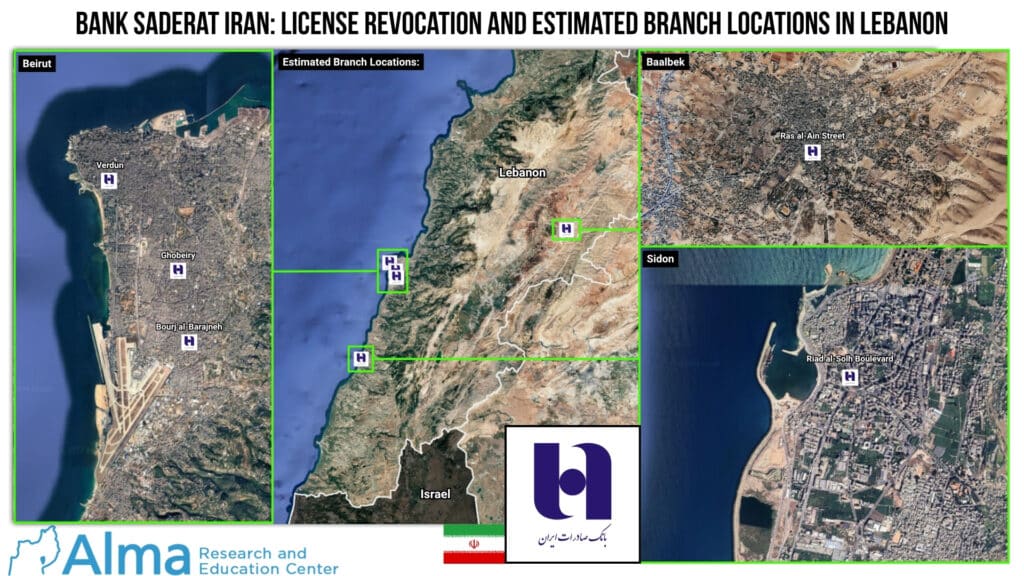
In October 2026, Lebanon’s central bank revoked the local operating license of Bank Saderat Iran (بنك صادرات ايران), one of Iran’s largest and longest-established banks, which has operated in Lebanon since 1962. Central Bank Governor Karim Souaid (كريم سعيد) confirmed the decision on October 15, explaining that it was intended to protect Lebanon’s banking system from sanctions risks and preserve its ties to the international financial system. Souaid also linked the move to Lebanon’s efforts to exit the Financial Action Task Force (FATF) gray list and curb illicit financial activity.
Bank Saderat has a history of U.S. sanctions for facilitating terrorist financing. In 2006, the U.S. Treasury Department cut the bank off from the U.S. financial system, and in 2007, designated it for supporting terrorism. According to the U.S. Treasury Department, between 2001 and 2006, Bank Saderat transferred $50 million from the Central Bank of Iran through its London subsidiary to its Beirut branch for Hezbollah in Lebanon.
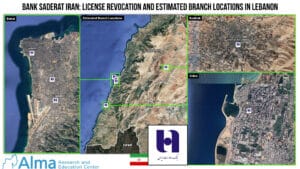
Bank Saderat’s operations in Lebanon have contracted significantly over the years amid sanctions, exclusion from the clearing system, and the loss of local and international banking ties. The bank currently has five branches: three in Beirut, in the neighborhoods of Verdun (فردان), Ghobeiry (الغبيري), and Burj al-Barajneh (برج البراجنة); one in Baalbek, and one in Sidon.
The decision to revoke the license drew opposition from the Deputy Chairman of the Supreme Islamic Shiite Council, Sheikh Ali al-Khatib (الشيخ علي الخطيب). On October 29, after meeting with a delegation from Bank Saderat’s management, al-Khatib called for the decision to be reversed, claiming that it represented capitulation to American dictates and warning of harm to employees and customers. He also called for the ban on Iranian civilian flights to Lebanon to be lifted.
The revocation of Bank Saderat’s license in Lebanon comes 20 years late, at a time when its operations and financial influence are limited. Concrete evidence of the Lebanese state’s willingness to act against the active and influential financial network associated with Hezbollah should take the form of revoking the license of al-Qard al-Hassan Bank and closing its branches. The institution received its operating license as a “charitable association” from the Lebanese Ministry of Interior in 1987.