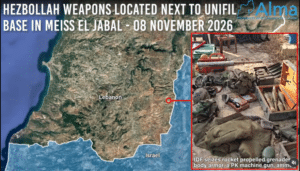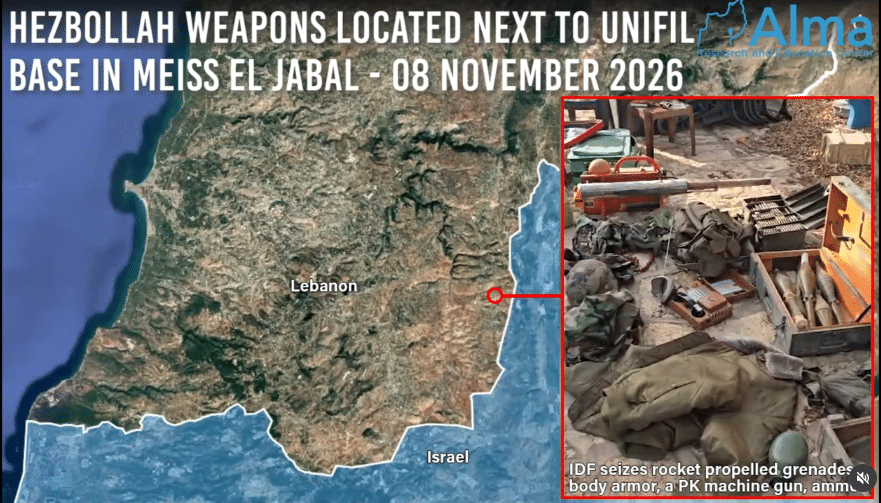
This is what was found inside a civilian home in Meiss al-Jabal, southern Lebanon: rockets, ammunition, communications equipment, and Hezbollah military gear.
All of this was found in civilian structures located just 100 to 200 meters from UNIFIL posts.
These findings once again demonstrate how Hezbollah exploits civilian areas in southern Lebanon to store weapons and establish military infrastructure, right under the noses of UNIFIL forces.
On December 31, 2026, UNIFIL’s mandate is set to expire. Since 2006, the force has operated in southern Lebanon under a mandate authorizing the deployment of up to 15,000 troops. One of its primary missions has been to help ensure that the area south of the Litani River remains free of Hezbollah’s military presence and weapons.
In reality, over the past two decades, Hezbollah has built an extensive military infrastructure across southern Lebanon, including facilities and weapons stockpiles inside civilian homes and near UN positions, while the international force has stood idly by as Hezbollah expanded its military capabilities.
The findings in Meiss al-Jabal are yet another example of the gap between UNIFIL’s mandate and the reality on the ground.
After two decades in which the international force has failed to prevent Hezbollah’s military buildup in southern Lebanon, it is difficult to see how extending its mandate or deploying a replacement international force, without fundamental changes to its authority and enforcement capabilities, would produce a different outcome.