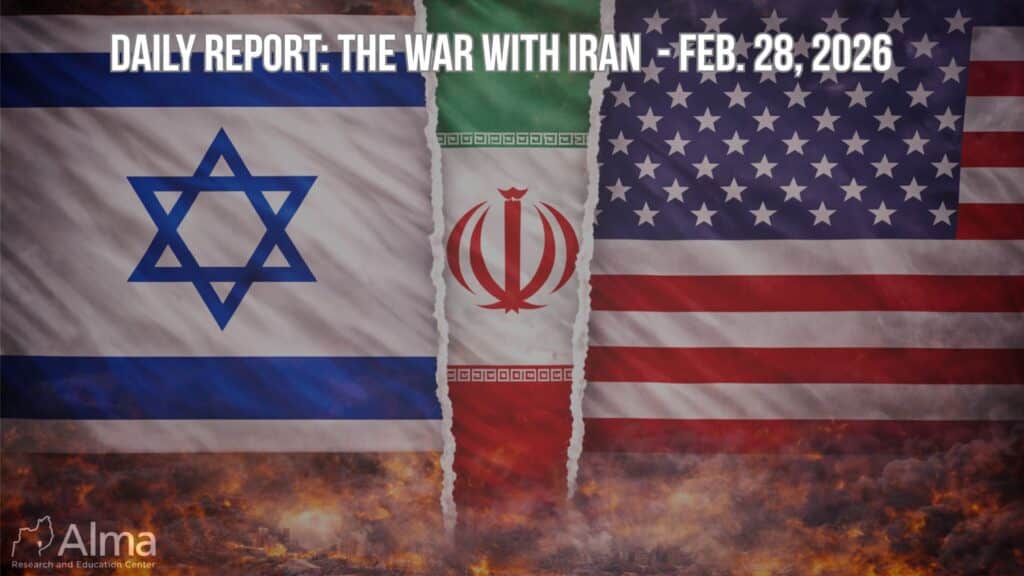
Today (February 28, 2026), at 8:15 a.m. Israel time, the United States and Israel began a joint attack against military and governmental targets in Iran.
The Iranian Arena
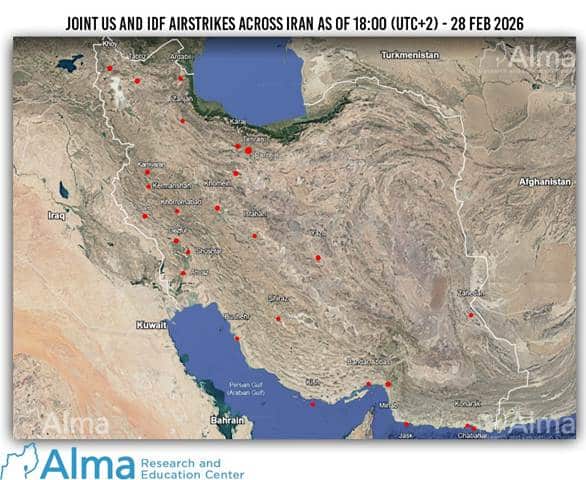
During the afternoon hours, approximately 200 fighter jets of the Israeli Air Force simultaneously struck about 500 targets belonging to the Iranian missile array and air defense systems in western and central Iran, severely damaging Iran’s offensive capabilities.
This was the largest strike sortie in the history of the Israeli Air Force.
So far hundreds of targets have been struck across 28 regions throughout the country. In Tehran, the targets included: the Ministry of Defense, the Ministry of Intelligence, the Atomic Energy Headquarters, Khamenei’s residence/office, the Judiciary building, and the Presidential building. Additional nuclear facilities were reportedly attacked in Karaj and near Qom.
In the east of the country, the targets included the IRGC Aerospace Forces in Tabriz, Kermanshah, Khorramabad, Dezful, and additional areas. In the south of the country, the targets included facilities belonging to the IRGC Navy and the Aerospace Forces. In addition, there were reports of strikes against senior figures in the Iranian leadership, including Khamenei, the army, and the Revolutionary Guards; at this time, there is no confirmation regarding who was eliminated.
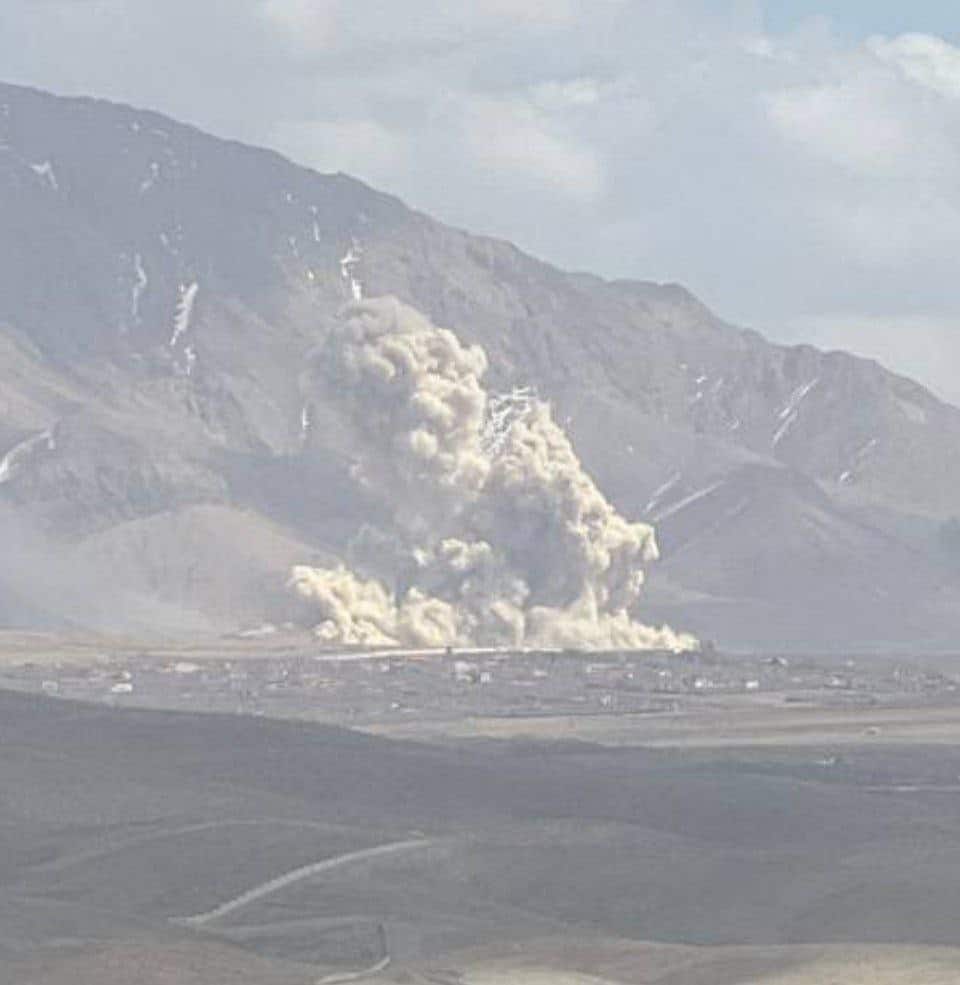
Strike on Mount Damavand
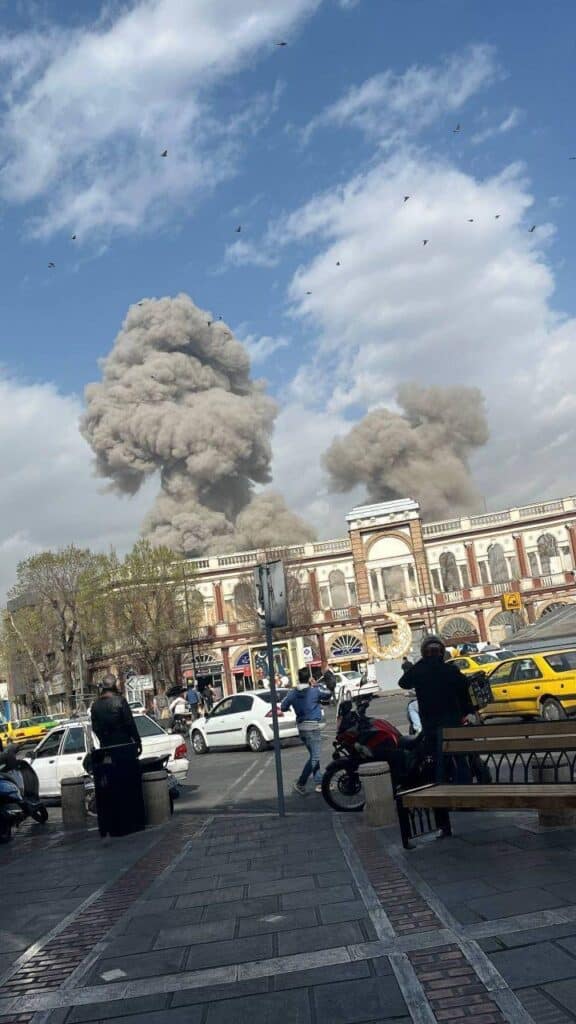
Strike in Tehran
Iran Attacks Targets in the Middle East
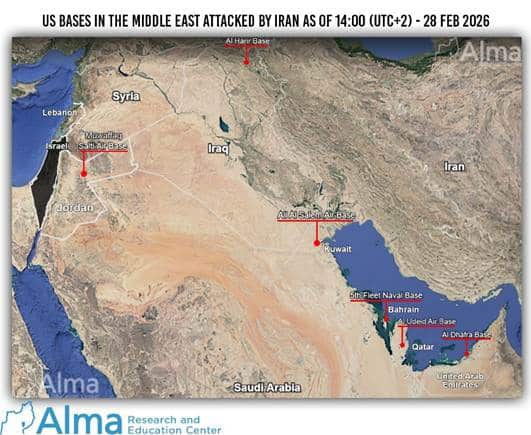
In response, Iran attacked American targets in the Middle East using missiles and UAVs. As of now, six bases across the Middle East where American troops are stationed have been targeted, including in Iraq, Jordan, Bahrain, Qatar, Kuwait, and the United Arab Emirates. In addition, strikes in civilian areas in the United Arab Emirates and Bahrain were reported.
According to unverified reports, the Revolutionary Guards announced the closure of the Strait of Hormuz.
The Israeli Arena
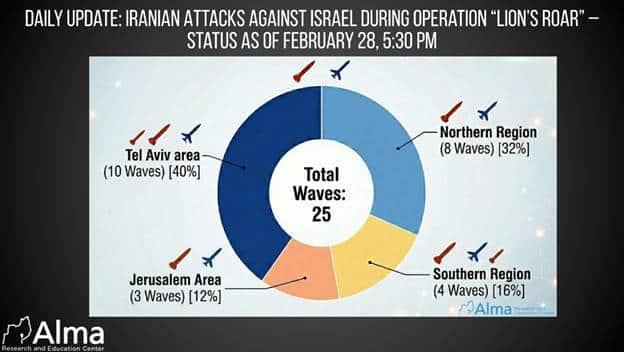
So far, 23 waves of attacks have been carried out against Israel (28.2, 17:00): eight toward the northern region, nine toward the Tel Aviv area, three toward the Jerusalem area, and three toward the southern region.
To date, two mildly injured individuals have been reported, along with damage to homes, including as a result of direct hits and interception debris.
Unlike the 12-day war, Iran appears to be launching a large number of barrages, but with a small number of missiles in each barrage.
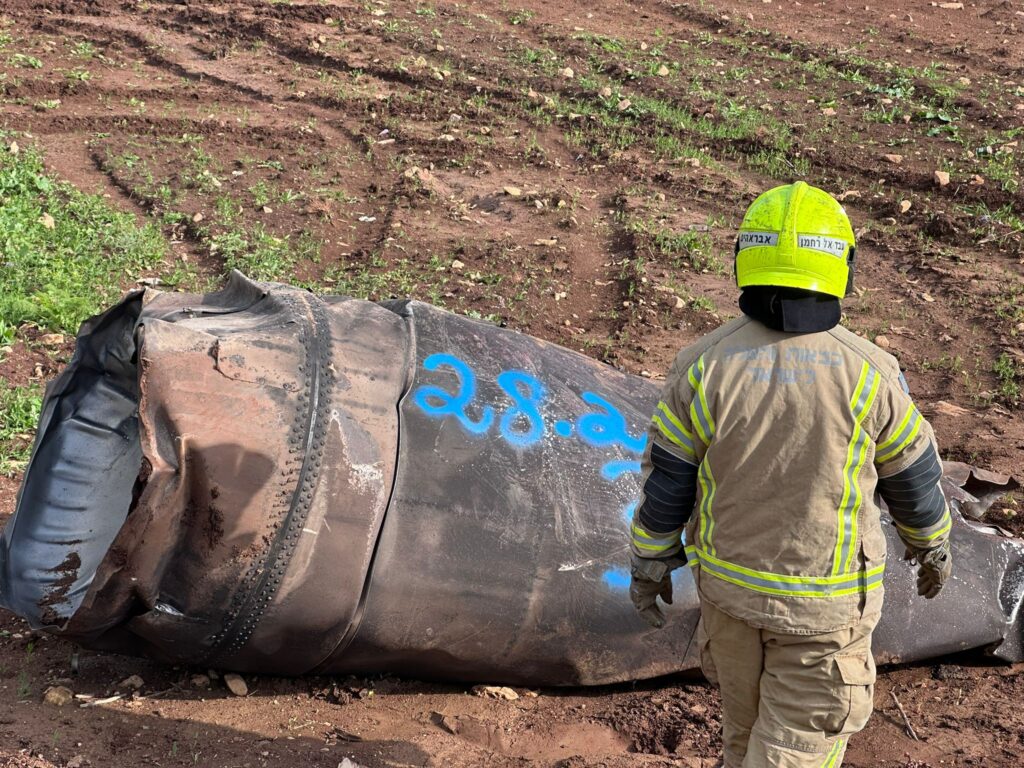
Credit: Fire and Rescue Services Spokesperson
Lebanon and Hezbollah
Following the war between Israel and Iran, the Lebanese government held an emergency meeting to examine the country’s preparedness, ensure continuity of services, and prevent shortages of goods. The president emphasized the need to maintain neutrality and prevent Lebanon from being drawn into external conflicts. At the same time, discussions were held regarding aviation safety after many flights to Beirut were canceled.
Hezbollah, according to reports, has raised its level of alert and is adopting a policy of waiting and caution, while conveying messages that it will intervene only if “red lines” are crossed. In a statement of condemnation it issued, Hezbollah expressed solidarity with Iran and condemned the attack but did not specify how it would act.
Israel warned of a heavy price if the organization enters the fighting while international actors inquired about its position, without a clear response.
The International Arena
Russia and Pakistan condemned the attack on Iran and called for a diplomatic solution. The United Kingdom, Canada, and Australia issued statements of support, while the President of France stated that he hopes Iran will return to the negotiating table.
Egypt condemns the Iranian attack on the sovereignty and territorial integrity of “sister” Arab states and expresses solidarity with them.