
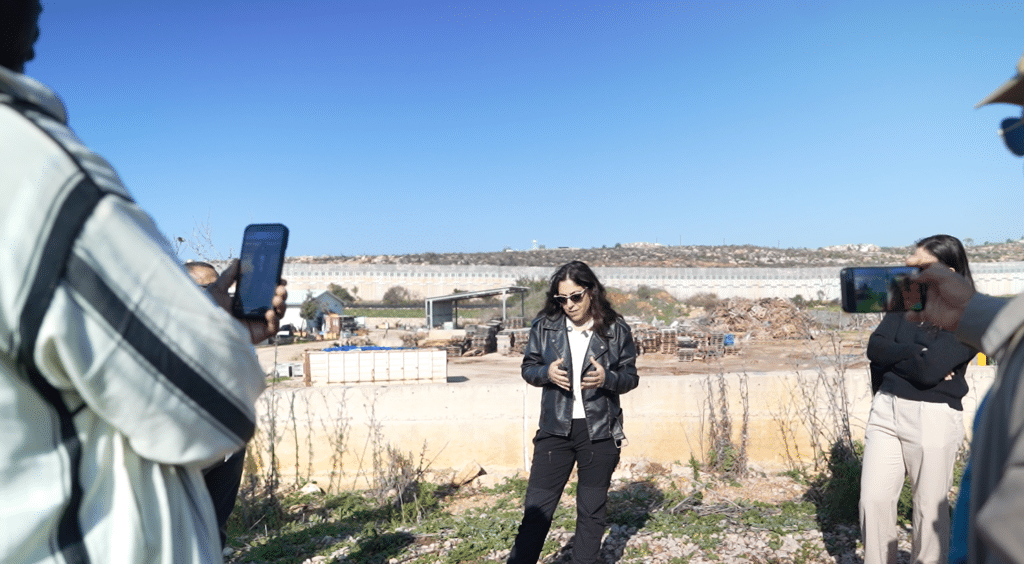
As reports continue to come in regarding the new Iranian – American memorandum of understanding, the atmosphere here in northern Israel is one of concern. There is a deep, growing fear that we are reverting to a reality similar to the aftermath of the 2006 War in the sense of Israel refraining from Hezbollah’s force build-up. The IDF’s security zone does provide a solution against Hezbollah’s mass raid threat, but we fear a situation in which Hezbollah is allowed to rebuild its military threats beyond the security zone against our northern communities and against the IDF, while Israel’s hands are tied, unable to take action against this gathering threat. For a post-October 7 Israel, this is an intolerably dangerous reality that we simply cannot accept.
When analyzing the details emerging about the recent agreement with Iran, we can point to several critical problems and explain exactly why this deal is so disturbing.
First, we must look at what is missing from the agreement. The very issues that necessitated our military campaigns are absent. There appears to be no mechanism to dismantle the Iranian ballistic missile program, which we all understand poses a direct, existential threat to Israel. Furthermore, the deal fails to sever the connection between Iran and its proxies. There is no clear, enforceable commitment to end Iranian financial and military support for these terror groups. We are already seeing alarming discrepancies between the American and Iranian versions of the agreement regarding this exact issue.
Second is the nuclear issue. If the published reports are accurate, the American working assumption relies on intelligence visibility—the belief that they can see what is happening underground and monitor if the Iranians access enriched uranium, combined with an Iranian commitment not to pursue a nuclear weapon.
We must explain why this is a fatal flaw. While Iran’s Supreme Leader Khamenei has claimed for years that he does not want to develop a nuclear weapon, the Islamic Revolutionary Guard Corps has been aggressively racing toward that exact goal. This includes enriching uranium to 60 percent, a level that has absolutely no civilian justification. Moreover, history has already proven that Iran systematically cheated following the JCPOA. They did not halt their nuclear pursuit, nor did they close the facilities they were obligated to dismantle.
Therefore, from our perspective in Israel, an Iranian declaration is meaningless. The central questions remain completely unanswered: How will this agreement actually be enforced? How can anyone verify that no uranium enriched above low civilian levels remains on Iranian soil?
The third major problem is what is actually included in the agreement: the explicit linkage between Lebanon and Iran. Let me be clear, there is nothing new in the connection between Lebanon and Iran; we have lived the deadly reality of this connection for the past three years. However, if President Trump decided he needed a ceasefire with Iran, it was a profound strategic error to link it to Lebanon.
This linkage does two negative things. First, it serves as a de facto American recognition that Hezbollah is an Iranian proxy and that Iran holds the power to dictate Lebanon’s
future. Second, instead of lifting restrictions on Israel’s freedom of action against Iranian threats, this deal imposes severe limitations on our ability to act in both Iran and Lebanon. Today, we could find ourselves in a situation where if we see Hezbollah smuggling weapons, establishing new weapons manufacturing plants, and rebuilding its forces on Lebanese soil, we are restricted from striking them. This is a massive strategic failure.
Additionally, if this agreement results in the unfreezing or transferring of funds to Iran, we know exactly where that money will go. It will not reach the Iranian people; it will flow directly to Hezbollah.
This brings me to my final point: the Iranian people. During the recent campaigns, the phrase “help is on the way” resonated deeply with those seeking freedom in Iran. Many people are now asking themselves how this deal assists in changing the oppressive regime in Tehran. It appears to do the opposite, strengthening the current regime instead of weakening it.
I can only hope that there is more going on behind the scenes than meets the eye, and that strategic moves are occurring that we are simply not yet aware of. Time will tell.


3 Responses
Siri, you are amazing thank you so much for this analysis of what’s going on to worry about this so-called truce and how it affects Israel and Israel’s war against Hezbollah and I’m not sure that the US is gonna be able to track any movement in Iran to build uranium bombs
Dear Sarit,
We must first acknowledge that the ayatollah/IRGC regime has by their own behavior proven that they are a terrorist pirate, death cult regime determined to destroy both the State of Israel and the USA. So no matter what they agree to do it is basically irrelevant. Israel must itself look towards defeating these sworn enemies. On the global overview, this is only one of many fronts under USA consideration. It appears to me that the delusional attacks by the alternate reality ayatollah have been countered by similar measures for temporary tactical purposes. Stock up your ammunition and select appropriate ordinance to execute a complete regime change, with the elimination of all proxies and P.A. threats. Prepare for exponential escalation.
Thank you for doing this job. Be blessed by HaShem