The Iranian Arena
During the weekend (April 3–4), widespread waves of strikes continued across Iran.
In Tehran, it was reported that the IDF struck air defense systems, ballistic missile arrays, and research and development sites for weapons.
At the same time, a large-scale strike was carried out on the largest petrochemical complex in Mahshahr, during which several facilities were hit. The targeted area is responsible for approximately 70% of the gasoline supply for domestic use in Iran.
In addition, the area surrounding the Bushehr nuclear power plant was struck, this marks the fourth attack in the area. Following this, Russia began evacuating 198 of its citizens working at the facility.
Additional strikes were reported in the cities of Karaj, Tabriz, and Abadan.
On Friday (April 3), a U.S. F-15 fighter jet was shot down in Iranian territory. One crew member was rescued the same day, while the second was rescued on Sunday (April 5) in a complex operation. During the search for the crew member, an additional U.S. A-10 fighter jet crashed, and a Black Hawk helicopter was damaged, with all crew members rescued safely.
Since the beginning of the campaign, the U.S. Air Force has lost at least ten manned aircraft in a series of incidents, including interceptions, operational accidents, deliberate self-destruction, and attacks on ground bases.
Iranian Activity in the Regional Arena
Bahrain– An Iranian strike targeted an oil storage facility, resulting in a fire at the “Bapco” refinery.
Kuwait – An attack was reported on the Ministry of Oil building, as well as a strike on a gas facility using an Iranian UAV. In addition, two power stations, a desalination facility, and a government office complex were targeted. Kuwaiti oil authorities reported that several facilities in the oil and petrochemical industries were damaged.
United Arab Emirates – In Abu Dhabi, an Egyptian citizen and four additional foreign workers were killed in a strike on a gas facility. Additionally, 12 people were reported injured by interceptor debris in Ajban, northeast of Abu Dhabi. As of April 4, 23 ballistic missiles and 56 UAVs were launched toward the country.
Jordan – The Iranian military announced that it attacked U.S. bases in Jordan overnight.
Saudi Arabia – The Saudi Ministry of Defense reported the interception and destruction of a cruise missile.
Maritime Arena – The IRGC Navy claimed that on April 4 it attacked the vessel MSC Ishika, which it described as “linked to Israel,” in the Strait of Hormuz using a UAV.
Forces of “Zainebiyoun” (a Shiite militia affiliated with the IRGC, composed of operatives of Pakistani origin) were documented in the city of Qom. In addition, “Fatemiyoun” forces (an Afghan militia) were observed operating alongside the regime, primarily to strengthen control in the urban space.
Iraq
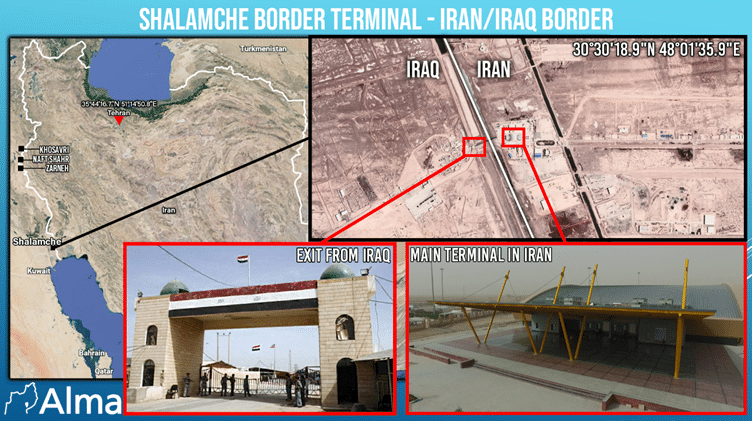
According to reports on Iraqi channels, convoys of vehicles and trucks traveling from Iraq to Iran were attacked in the area of the al-Shalamcheh border crossing. One person was killed and five others were injured in the strike.
The Israeli Arena
During the weekend (April 3–4), 14 attacks using ballistic missiles were carried out from Iran (6 on Friday and 8 on Saturday), half of them (7) directed at the northern region, 5 toward the center, and one each toward the south and Jerusalem.
Over the weekend, a concentration of Iranian attacks on northern Israel was evident.
Falling debris and cluster munitions were identified in civilian areas: Kiryat Ata, Haifa, a residential building in Bnei Brak, and a school in central Tel Aviv. Several people were injured and damage was caused.
As of Sunday, April 5, 2026, at 07:00, 6,833 casualties had been evacuated to hospitals.
The Houthis carried out one attack toward the central region; the missile fell in an open area.
In the northern arena, over the weekend, Hezbollah carried out 51 attacks against Israel (29 on Friday and 22 on Saturday).
On Saturday, a rocket fell in a residential neighborhood in Kiryat Shmona without prior warning. There were no casualties, but damage was caused.
33 attacks were carried out against communities near the border (0–5 km). In addition, other communities in the Galilee were targeted, including the cities of Nahariya, Acre, Safed, and Rosh Pina.
In addition, Hezbollah carried out one attack toward the Krayot and Haifa area, and simultaneously toward the Jezreel Valley (over 50 km from the border), which included approximately 10 rockets and surface-to-surface missiles that were intercepted or fell in open areas, with no damage reported.
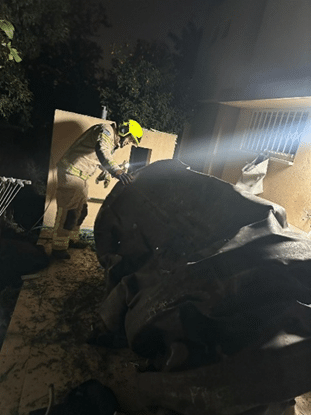
Missile fragment in the community of Rakefet in the Galilee (credit: Fire and Rescue Services)
Lebanon and Hezbollah
Lebanese Deputy Prime Minister Tarek Mitri addressed the statements by the Israeli Minister of Defense regarding the establishment of a security zone up to the Litani River and the destruction of border villages. According to him, Israel “does what it says and says what it does,” and in practice is advancing a plan to create a buffer zone south of the Litani—an area intended to be uninhabited following the destruction of villages and the displacement of their residents. Mitri noted that this trend is emphasized daily by senior Israeli officials.
In an interview with Sky News Arabia, Mitri added that these developments mark a new phase in the war imposed, in his view, on Lebanon, one in which Lebanon becomes another arena of confrontation between Israel, the United States, and Iran.
Mitri stressed that Lebanon has a clear interest in ending the war and reaching a ceasefire, but has no interest in having its fate tied to the broader confrontation between Iran, the United States, and Israel. According to him, the preferred option for Lebanon is to exit the war through independent negotiations, without reliance on Iran. However, he expressed doubt regarding the feasibility of such a move, given what he described as a lack of Israeli willingness to advance negotiations focused on a ceasefire.
He further noted that any negotiation process between Lebanon and Israel requires a mediator, adding that at present it is unclear who could fulfill this role.
Lebanese Minister of Health Rakan Nasser al-Din (a Shiite figure affiliated with Hezbollah) announced that the Lebanese government intends to file an official complaint with international bodies regarding Israeli strikes on Lebanese healthcare institutions. He stated that his ministry is working to document these incidents in preparation for legal action, arguing that they constitute a blatant violation of international law, particularly the protections afforded to medical personnel during armed conflict.
Following an evacuation notice issued by the IDF Spokesperson regarding the al-Masnaa border crossing (on the Damascus–Beirut route), citing Hezbollah’s use of the crossing for smuggling weapons, Lebanese Minister of Public Works and Transport Fayez Rasamny (Druze, Socialist Party) denied the claims.
In an official statement, Rasamny said that “the crossing is not used for weapons smuggling and that these claims are unfounded.” According to him, the al-Masnaa crossing is under full supervision and control of the relevant Lebanese security agencies, which carry out thorough inspections of all trucks using advanced scanning systems, as well as security coordination with Syria.
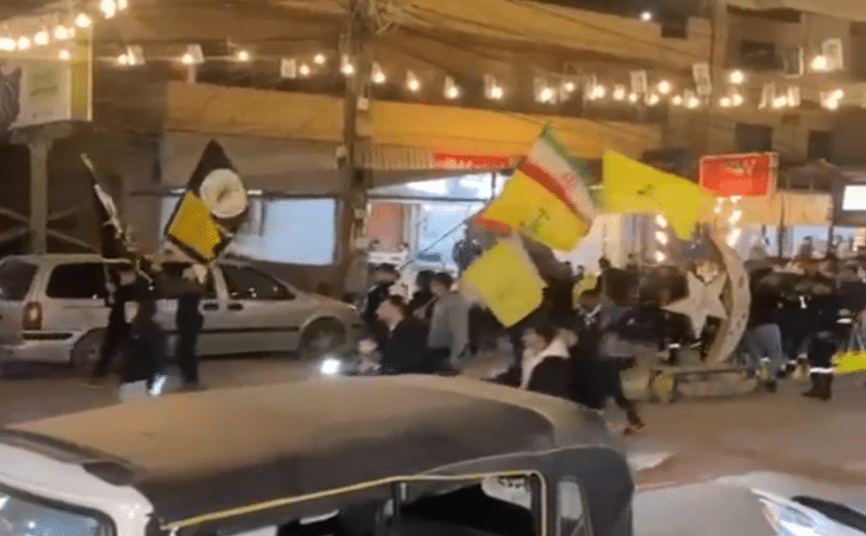
In Palestinian refugee camps in northern Lebanon, mass rallies were held, during which Hezbollah and Iranian flags were raised and chants in support of the military activity of the “Axis of Resistance” were heard. These events reflect the depth of the connection between the Palestinian population in Lebanon and the narrative and activity of the pro-Iranian axis.
launch carried out by Hezbollah fell inside a UNIFIL position in the al-Adaisseh area in southern Lebanon. As a result of the incident, three UN personnel were injured, two of them seriously.
According to an IDF Spokesperson statement, since Hezbollah joined the war on March 2, approximately 165 launches fired by Hezbollah have been identified as having landed inside or near UNIFIL positions.
Over the past two days, Israeli military activity in southern Lebanon has continued, including airstrikes, artillery fire, and ground operations south of the Litani.
Among the targets struck were headquarters used by the Lebanon Corps of the Iranian Quds Force.
As part of the ground activity, the IDF carried out targeted raids on Hezbollah military structures, during which large caches of weapons were located and confiscated, including anti-tank missiles, RPGs, rockets, Kalashnikov rifles, and magazines.
Hezbollah, in a false statement, claimed on April 5 that it had launched a sea-to-sea missile at an Israeli vessel and hit it.
Syria
On April 4, Syrian media reported one person killed by Israeli tank fire in the area of the village of Rafid, south of Quneitra, and another Syrian injured.
Pro-Palestinian demonstrations continued over the weekend. In this context, it was reported that Sunni protesters supporting Hamas attacked the UAE embassy compound in Damascus. In addition, Hamas supporters hung Palestinian flags on the fence of the U.S. embassy in Damascus.
See our article on the subject, published separately on April 5.
The International Arena
India’s Ministry of Petroleum confirmed that it has resumed purchasing oil from Iran – for the first time since 2019.
At the same time, a container ship belonging to the French shipping company CMA CGM crossed the Strait of Hormuz, apparently the first passage of a European vessel since the outbreak of the war. It was also reported that ships from Japan and Oman crossed the strait as well, likely in coordination with Iran.
It was further reported that Oman and Iran are expected to hold a joint meeting to examine the regulation of passage through the Strait of Hormuz for humanitarian purposes.
According to a report in The Wall Street Journal, Qatar is reluctant to take on a mediating role in ceasefire talks between the United States and Iran.
Meanwhile, Iran’s chargé d’affaires in Argentina, Mohsen Tehrani, left the country after being declared persona non grata.
The diplomatic advisor to the President of the United Arab Emirates, Anwar Gargash, sharply criticized the Syrian authorities following the violent protest near the UAE embassy in Damascus. He stated that attacks on embassies and diplomatic missions constitute a blatant violation of international law and reflect a serious failure in the security environment of the host country.
Gargash emphasized that this was the action of a small and extremist group operating under an unacceptable agenda, particularly given that the UAE hosts a large Syrian community living in stability and security. He added that such incidents send dangerous messages and require a clear decision and full commitment by Syria to uphold international law and ensure the security of diplomatic missions.