
The Iranian Arena
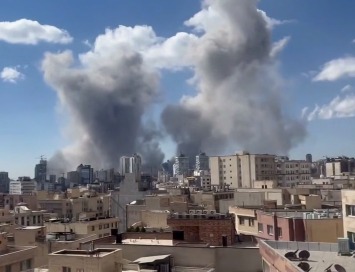
Over the past 24 hours, Israel and the United States have struck hundreds of targets in Iran. Among them, the Iranian Broadcasting Authority building was struck in Tehran; the “Imam Ali” missile base was struck in Kermanshah; two F-5 and F-4 fighter jets were struck in Tabriz; and additional strikes were carried out in Bandar Abbas, Shiraz, Mashhad, and Rezvanshahr. In addition, United States Central Command reported that it had sunk an Iranian warship.
Strikes in Tehran
Targeted Eliminations
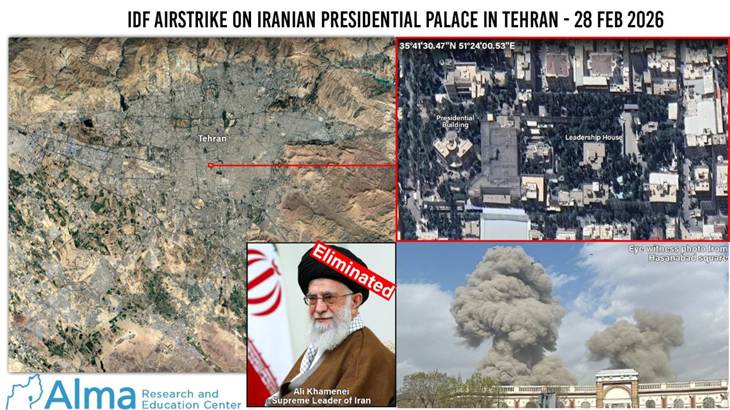
Since the beginning of the operation, a series of senior figures in the Iranian leadership have been eliminated (most of them in the opening strike), including Iran’s Supreme Leader, Ali Khamenei. In addition, the following were eliminated: Ali Shamkhani, advisor to the Supreme Leader and Secretary of the Defense Council; Mohammad Shirazi, head of the Supreme Leader’s military office; Defense Minister Aziz Nasirzadeh; IRGC Commander Mohammad Pakpour; Salah Asadi, The head of the intelligence department in the military emergency command (Khatam al-Anbiya Headquarters); Hossein Jabal Amelian, head of SPND; former head of SPND Reza Mohammadi Nia; Chief of Staff Abdolrahim Mousavi; and Gholamreza Rezaian, head of the IRGC’s police intelligence organization.
It should be noted that alongside expressions of mourning, expressions of joy over Khamenei’s elimination were also documented in Iran.
Iran Attacks Targets in the Middle East
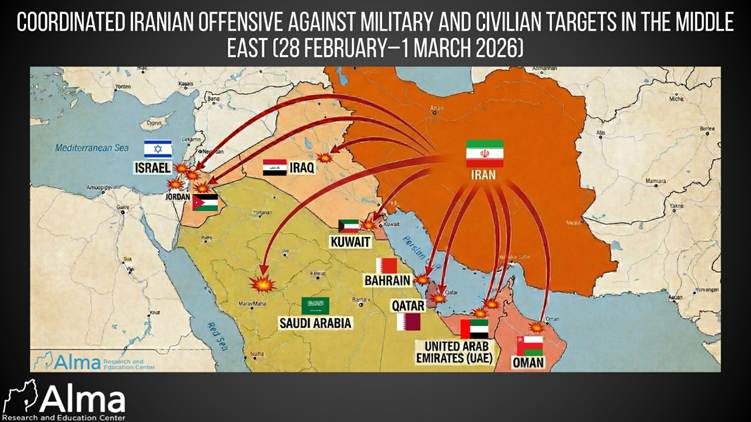
Oman (which is mediating negotiations between Iran and the United States, and whose foreign minister, as of this writing, is calling for the renewal of negotiations) has joined the map of Iranian attacks.
In an attack by two Iranian UAVs on Duqm Port in Oman, one person was injured. In addition, the oil tanker “Skylight” was attacked five nautical miles off the coast of Oman, and four of the 20 crew members were injured. The entire crew was evacuated following the attack.
At the same time, Iran continues to deliberately target civilian objectives in the UAE, Bahrain, Kuwait, and Qatar.
In light of the attacks on vessels in the Strait of Hormuz area, maritime traffic through the strait is de facto limited/suspended.
According to a U.S. military statement, three American soldiers were killed and five were seriously wounded as a result of an Iranian attack.
The IDF assesses that Iran currently possesses up to approximately 2,500 ballistic missiles. In recent months, the Iranians have invested significant efforts in restoring their missile production capabilities. The main Iranian effort has focused on rebuilding the mechanisms and centers of expertise that were destroyed in June 2025 (on the eve of the war in June, Iran’s missile arsenal included approximately 3,000 missiles).
Prior to the current war, Iran’s missile production rate stood at dozens per month. The IDF identified that the production rate was accelerating, and that the Iranian regime was working to procure numerous means from various countries intended for the rehabilitation and expansion of its ballistic missile array.
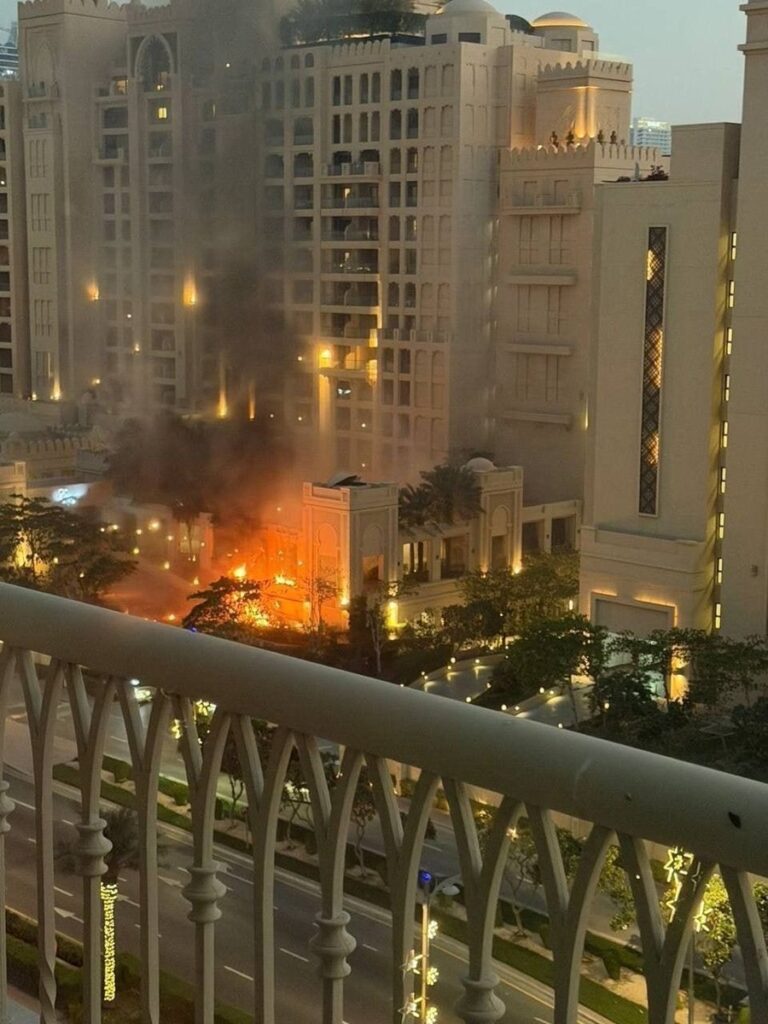
Iranian attack in Dubai
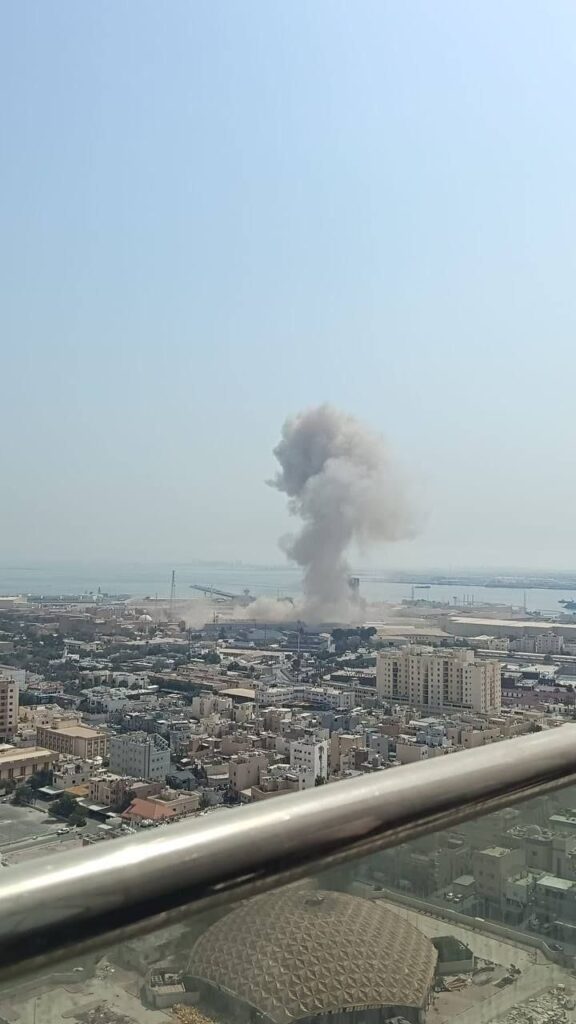
Iranian attack in Bahrain
The Israeli Arena
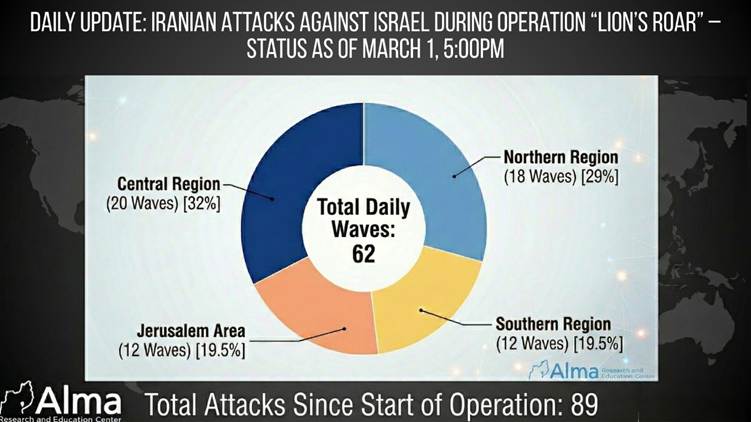
Over the past 24 hours, Iran has continued to launch frequent barrages, including against concentrations of civilian population, with each barrage consisting of a small number of missiles. The frequency of the barrages has resulted in prolonged stays in shelters for Israeli civilians, in a deliberate attempt to exhaust the Israeli home front.
In the past 24 hours, as of 17:00, 62 waves of attacks have been carried out against Israel, including launches of ballistic missiles and UAVs. Since the beginning of Operation “Roaring Lion” (February 28), a total of 89 waves of attacks have been carried out against Israel.
A direct hit on a building in Tel Aviv (February 28) resulted in the death of one Israeli civilian and injuries to others. In addition, the death of a 102-year-old civilian was confirmed after he fell and was injured during the siren.
A direct hit in Beit Shemesh (March 1) resulted in the deaths of nine Israeli civilians and injuries to dozens more. At this stage, 11 people are still considered missing, and the search for them is ongoing.
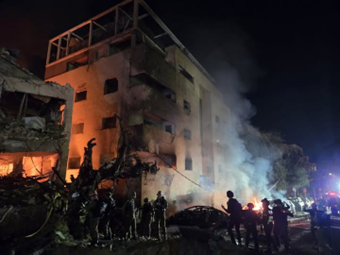
Damage to a residential building in the Gush Dan area. Credit: Israel Fire and Rescue Services
Lebanon
The Lebanese Ministry of Foreign Affairs condemned the Iranian attacks against Gulf states and declared solidarity with the affected countries.
Reports indicate that security forces have raised their alert level to approximately 75% as a precaution against potential security developments. There were also reports of increased deployment of the Lebanese Army and UNIFIL forces along the border with Israel and in areas north and south of the Litani.
Lebanese security forces have implemented heightened security measures around embassies, particularly around the U.S. Embassy.
Parliament Speaker Nabih Berri issued a statement of mourning and religious praise for Khamenei, presenting him as a religious leader and a fighter.
There are continued reports of cash withdrawals, stockpiling of food, and crowds at gas stations amid concerns over a prolonged conflict and its impact on supply and prices
Hezbollah
Following the announcement of Khamenei’s elimination, Naim Qassem issued a harsh ideological statement in which he described Khamenei as a “martyr” and the leader of the resistance camp, accused the United States and Israel of a criminal assassination, and pledged to continue along the “path of resistance” and to remain in the “arena of resistance.”
Immediately after the announcement of the elimination, gatherings of Hezbollah supporters were reported outside the Iranian embassy in Beirut, along with motorcycle processions in the southern suburbs, carrying Iranian and Hezbollah flags and firing into the air.
On March 1, a large rally is being held in the evening hours in Dahieh following Khamenei’s elimination.
Syria
On March 1, Syria clearly aligned itself with the Arab states affected by the Iranian fire, condemning Tehran and increasing internal precautionary measures.
The Syrian Ministry of Foreign Affairs strongly condemned the Iranian attacks against Saudi Arabia, the UAE, Bahrain, Qatar, Kuwait, and Jordan.
Both the Syrian president and the Syrian foreign minister held phone calls with some of their counterparts in the affected countries.
In southern Syria, debris from UAVs and missiles fell after being intercepted by Israeli air defenses – with no casualties reported.
A full closure of Syrian airspace and all airports was decided upon for 24 hours, beginning at midnight on March 1, due to safety considerations.
Reactions following Khamenei’s elimination:
Religious calls were heard in mosques across Syria after the announcement of Khamenei’s death.
At the same time, celebrations were reported in the city of Homs (New Clock Square), where residents were seen celebrating his elimination.
Celebrations were also reported in Damascus, with sweets distributed to the public in certain locations to mark the event.
The International Arena
The E3 countries (the United Kingdom, France, and Germany) expressed their support for the United States and Israel, condemned Iran for the attacks it carried out against Israel and other targets in the Middle East and called on Iran to halt its nuclear program. The Government of Canada also expressed its support for the United States. In contrast, the Prime Minister of Spain condemned the unilateral strikes by the United States and Israel.
Among the Gulf states, including Oman, Saudi Arabia, Qatar, and Kuwait, there were calls to halt the escalation and return to diplomacy. Conversely, the United Arab Emirates, Jordan, and Egypt condemned the Iranian attacks in the region.
Russia strongly condemned the United States and Israel and warned of dangerous escalation. Russian President Putin stated that Khamenei’s elimination was a “cynical murder constituting a violation of human morality.” Turkey also condemned the operation, claiming that it endangers regional security and stability.



One Response
The God of Israel Is Real~~❤️~~ Believe in His Son +❤️🤍💙