
The Iranian Arena
The IDF continues extensive strikes against targets in Iran. Among the targets struck were radar and detection arrays, surface-to-air missile launchers, surface-to-surface missile launchers and related infrastructure, command and control centers, strategic military bases in Tehran, and facilities belonging to the regime’s repression and enforcement mechanisms.
The IDF struck the Iranian leadership compound in Tehran, the regime’s most important and central headquarters, which was also used by Khamenei. One hundred aircraft participated in the strike. Two hundred and fifty munitions were dropped. The Iranian Broadcasting Authority was also attacked.
Over the past day, two strikes were carried out against Natanz, although the site has not been active since June 2025. Three buildings were destroyed, two of them pedestrian entrances and one a building that concealed a vehicle entrance to the underground site.
Strikes were also reported in the Isfahan area, in Parchin, Kerman, and against the Iranian Navy base in Bushehr.
The U.S. military destroyed 11 Iranian vessels.
According to various reports, Israel and the United States struck Iranian border forces along the Iran–Iraq border. Assessments in these reports indicate that the objective was to enable Kurdish forces in northern Iraq to enter Iran and operate from within against the regime.
In the afternoon hours (March 3), the Israeli Air Force struck a gathering of Iran’s “Assembly of Experts” in the city of Qom, while it was selecting a new Supreme Leader.
Iran Attacks Targets Across the Middle East
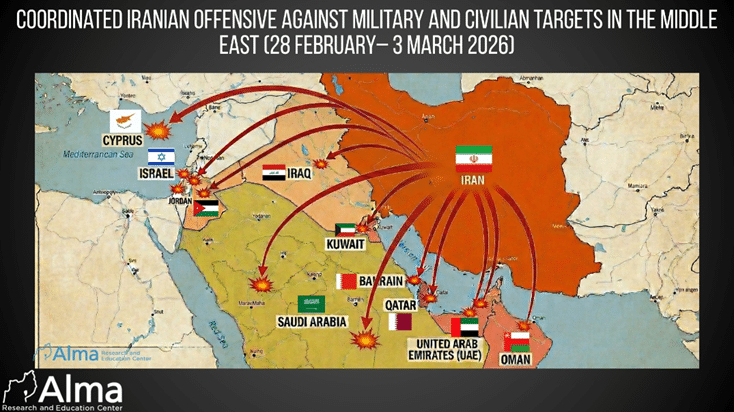
Iranian attacks across the Middle East continue, combining ballistic missiles and UAVs against both military and civilian targets. Over the past day, continued offensive activity was recorded in several key arenas, with an emphasis on American targets, military infrastructure, and energy infrastructure:
Iraq: The “Harir” base in the Kurdish region, near Erbil, was attacked by a UAV. In addition, the Al-Bakr military airfield in Salah al-Din province (where an American presence is known) was targeted, and missile and UAV fire toward American targets in Erbil was also reported.
Saudi Arabia: The U.S. embassy in Riyadh was attacked by a UAV. This is the second American embassy attacked by Iran; the first was in Kuwait.
Oman: A UAV struck fuel tanks at the commercial port of Duqm. UAV attacks were also reported in the port city of Salalah.
United Arab Emirates: Strikes were reported in Ras al-Khaimah. A UAV attacked the Australian Air Force base “Minhad” near Dubai. Damage to oil storage tanks at the port of Fujairah was also reported.
Qatar: The Al Udeid Air Base was attacked again, and an attempt was made to strike Hamad International Airport.
Alongside Iran, its proxy organizations in Iraq are also operating and carrying out attacks. The Islamic Resistance in Iraq claimed responsibility yesterday for 28 attacks involving missile and UAV launches against targets in Iraq and in the region.
In addition, Iran announced that it is closing the Strait of Hormuz.
The Israeli Arena
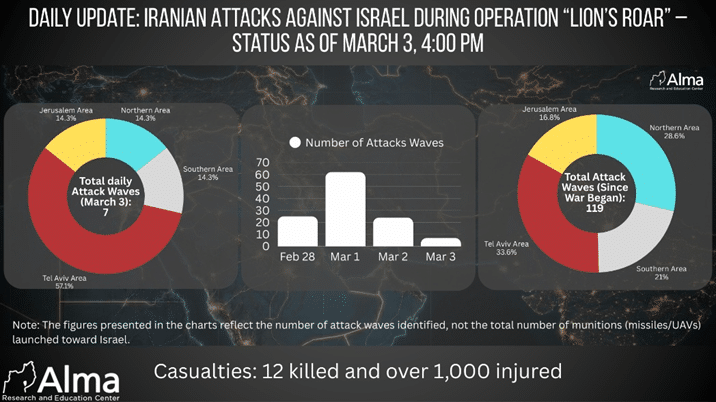
As of 16:00, seven Iranian attack waves have been carried out against Israel since yesterday, including launches of ballistic missiles. Since the beginning of the war, 12 civilians in Israel have been killed, and more than 1,000 have been injured to varying degrees. Since the start of the attacks against Israel, damage has been caused at several locations in the civilian home front. Hits to residential buildings have been reported, along with damage to homes and property, including as a result of blast waves and interception debris. Some buildings were evacuated for safety inspections, and residents were forced to temporarily leave their homes.
On the first day of the war (February 28), there were 25 Iranian attack waves against Israel; on the second day (March 1), which has so far been the most intense, there were 62 attack waves; on the third day, there were 24 attack waves from Iran. Since the beginning of the war, a total of 119 attack waves have been carried out from Iran against Israel.
Since the morning hours (March 3), Hezbollah has carried out several attacks toward northern communities. Among them, rocket fire was documented toward the Upper Galilee area—HaGoshrim, Ma’ayan Baruch, Ghajar, and Kfar Yuval. In one of the attacks, a residential home was struck by a direct hit from a Hezbollah rocket.
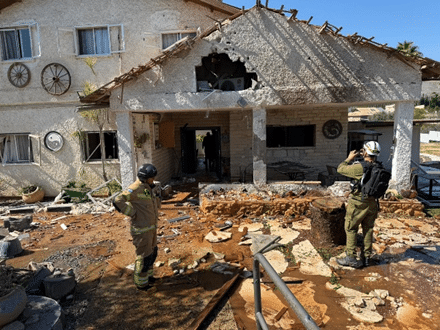
Damage in Kfar Yuval. Credit: Israel Fire and Rescue Services
Since the beginning of its involvement on March 2, Hezbollah has carried out 24 attack incidents against Israeli territory, including rocket and UAV launches. On the first day of Hezbollah’s entry (March 2), 10 attack incidents were documented. On the second day (March 3, 17:00), 14 attack incidents were documented.
The attacks were directed at the following areas:
• Communities along the Israel–Lebanon border
• Northwestern Israel along the Mediterranean coast
• Northeastern Israel (the Upper Galilee)
• Northern Golan Heights
• The Haifa Bay area in northern Israel
Lebanon and Hezbollah
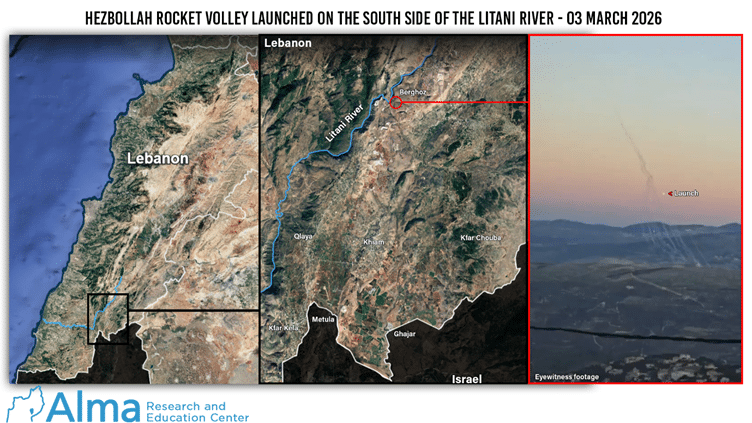
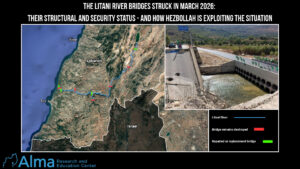
Lebanese President Joseph Aoun claimed that Hezbollah’s launches against Israel were carried out from north of the Litani. However, local documentation and geographic analysis of the launch points indicate that some of the launches were carried out, among other locations, from the village of Berghoz, which is located south of the Litani.
Israel continues to carry out strikes in southern Lebanon, the Beqaa, and Dahieh. Among other targets, the IDF struck 18 branches of Al-Qard al-Hasan, including in Tyre, Kfar Toul, Hermel, the Nabatieh area, Deir al-Zahrani, and Ain Bourday. The IDF also struck Hezbollah’s Al-Manar network building in Beirut and Hezbollah’s Al-Nour radio station.
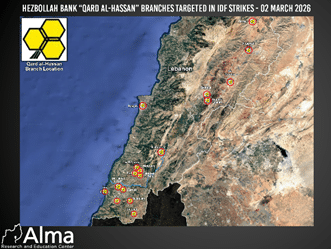

Map of Strikes on Al-Qard al-Hasan Bank Branches and the Strike on a Building in Dahieh, Beirut
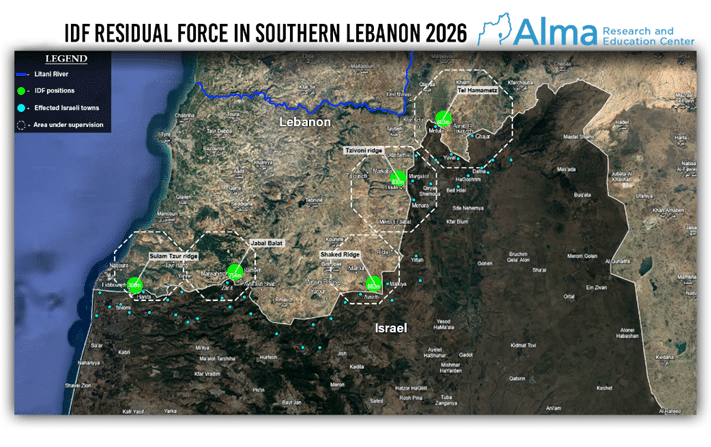
The IDF has reinforced its defensive deployment along the line of contact. Additional IDF forces entered the line-of-contact area in southern Lebanon and took control of dominant terrain. This is in addition to the five areas in southern Lebanon where the IDF has been physically deployed since November 2024. The objective is, among other things, to prevent direct fire and launches, such as anti-tank missiles, against Israeli communities located near the border. It is also intended to improve disruption and thwarting efforts against potential ground infiltration attempts into Israeli territory.
It was reported that the Lebanese Army has begun evacuating or pulling back from several border positions built in recent months and repositioning further inland.
The Navy struck and eliminated Reza Khazaei, who led the force-build-up portfolio for Hezbollah on behalf of the Quds Force and also served as chief of staff of the Force’s Lebanon Corps. Khazaei acted as the right-hand man of the corps commander and was considered a key figure in Hezbollah’s force build-up. He was responsible for liaison between Hezbollah and Iran, particularly for bridging the needs of the Hezbollah terrorist organization with the resources provided by Iran.
As part of the strikes over the past day, Adham Adnan al-Othman, commander of the military wing of Islamic Jihad in Lebanon, was also eliminated.
The Council of Ministers convened in Baabda and advanced a firm line aimed at anchoring the principle of the state’s exclusive authority over decisions of war and peace, and translating this into operational steps on the ground vis-à-vis Hezbollah. It was reported that the discussion explicitly addressed Hezbollah and that the direction was to move to the next stage: action on the ground and implementation of the “second phase” of the army’s plan, that is, not to suffice with declarations but to issue instructions for execution. The government presented a line emphasizing: the immediate prohibition of all Hezbollah security-military activity and its designation as illegal activity; a demand to hand over weapons to the state; and limiting Hezbollah’s activity to the political sphere within constitutional frameworks. Instructions were given to the army and security forces to prevent fire and launches, operate on the ground, and detain violators.
The Lebanese Minister of Communications delivered a clear message: “We cannot have half a state,” and “A group cannot make decisions in place of the state.” It was also reported that ministers from the Amal Movement did not place a significant obstacle to the government’s decisions, which was perceived as a “crack” vis-à-vis Hezbollah, or at least a signal that, above all, there is an interest in preventing deterioration that would severely harm the Shiite base as well.
The Lebanese Army deployed checkpoints on the road to the south. The Lebanese LBCI channel reported that the Lebanese Army arrested 12 armed Hezbollah operatives at one of the checkpoints it established on the road to southern Lebanon, in accordance with Lebanese government directives (at this stage, the arrest cannot be independently verified).
It was reported that UNIFIL ordered the evacuation of non-essential civilian staff who are not Lebanese, along with their families, as a precautionary measure due to the escalation along the Blue Line and the expansion of the strikes.
Iraq
Five operatives from the Iraqi Hezbollah Brigades militia were eliminated in the al-Qaim area on the Syria–Iraq border (on Iraqi territory).
The International Arena
Spain’s Prime Minister prohibited the United States from using Spanish military bases for strikes on Iran. Spain announced that its bases may not be used for operations that violate agreements or international law.
Turkish President Erdoğan sent condolences to the Iranian people and said that Turkey is working to achieve a ceasefire.
Russia condemned the U.S.–Israeli strikes on Iran, calling them “a preplanned and unprovoked act of armed aggression against a sovereign and independent UN member state.” Moscow demanded an immediate halt to the military campaign and called for a return to diplomacy.
The Russian Foreign Ministry specifically accused Washington and Tel Aviv of hiding behind concerns about Iran’s nuclear program while in fact pursuing regime change, and reiterated the need to stop further escalation.
Saudi Arabia strongly condemned the Iranian attack on the U.S. embassy in Riyadh, stating that it violates all international conventions, and emphasized that Saudi Arabia has the right to take all necessary measures to defend its territory and residents, including the option of responding to the aggression.
Following the attacks on Gulf states, Britain will send the destroyer HMS Duncan to the region, and France announced that it has deployed 1F aircraft to the United Arab Emirates.
According to several reports, Qatar carried out strikes in Iran over the past day (at this stage, this cannot be verified).


3 Responses
Dear Alma staff,
Thanks for your courage to provide wartime updates to your brothers in war. A good offense is the best defence. Let us strike and defeat our enemies! There can be no more ceasefire, no more withdrawals, no more concessions until TOTAL VICTORY!
Victory to Israel
Liberty to the World!!!
To stand by and await moderation is to concede ground to the enemy.
thank you for the through update.