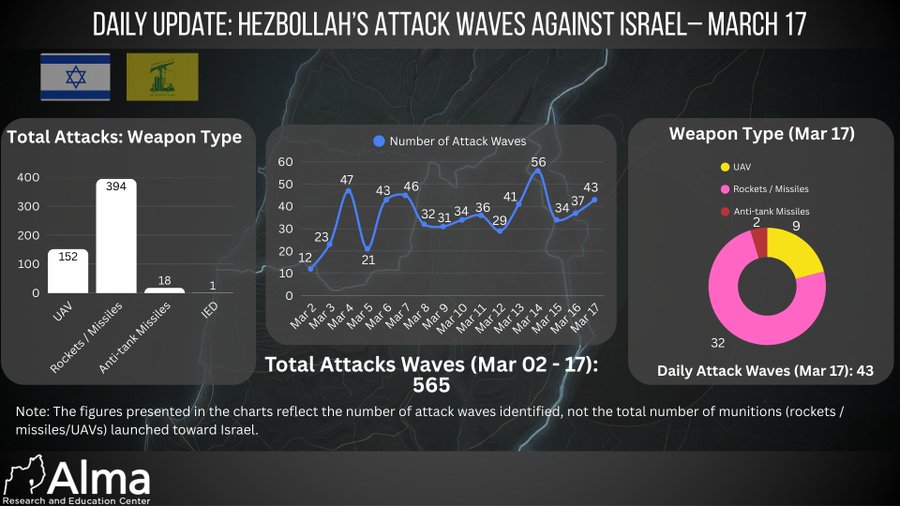
On March 17, 43 attack waves by Hezbollah against Israel were identified. In terms of weapon types, 32 attack waves (approx. 74.4%) were carried out using rockets and missiles, 9 attack waves (approx. 20.9%) using UAVs, and 2 attack waves (approx. 4.7%) using anti-tank missiles. The data refer to the number of identified attack waves, not the total number of munitions launched. Most of the attacks were directed toward border communities and the Galilee. In addition, 17 of the attacks during the day targeted IDF forces operating in southern Lebanon, indicating a significant Hezbollah effort in this arena. These attacks combined indirect fire, anti-tank missiles, and UAVs, and are based on Hezbollah’s claims of responsibility. It should also be noted that last night Hezbollah carried out a significant barrage toward northern Israel and even areas south of Haifa, including dozens of rockets and missiles alongside several UAVs. Since Hezbollah joined the fighting on March 2, a total of 565 attack waves against Israel have been identified. An analysis of weapon types shows that rockets and missiles remain the primary means of attack, with 394 attack waves, alongside 152 UAV attack waves, 18 anti-tank missile attacks, and one IED attack (based on Hezbollah’s claim of responsibility). An examination of the daily trend indicates a renewed increase in the scope of attacks. Following a peak on March 14 (56 attack waves), and a drop to 34 attack waves on March 15, the number rose again to 43 attack waves on March 17. Overall, the daily pattern reflects fluctuations in attack intensity, alternating between more intense and more moderate days. However, in aggregate, a relatively stable operational tempo is maintained, averaging approximately 35 attack waves per day.