
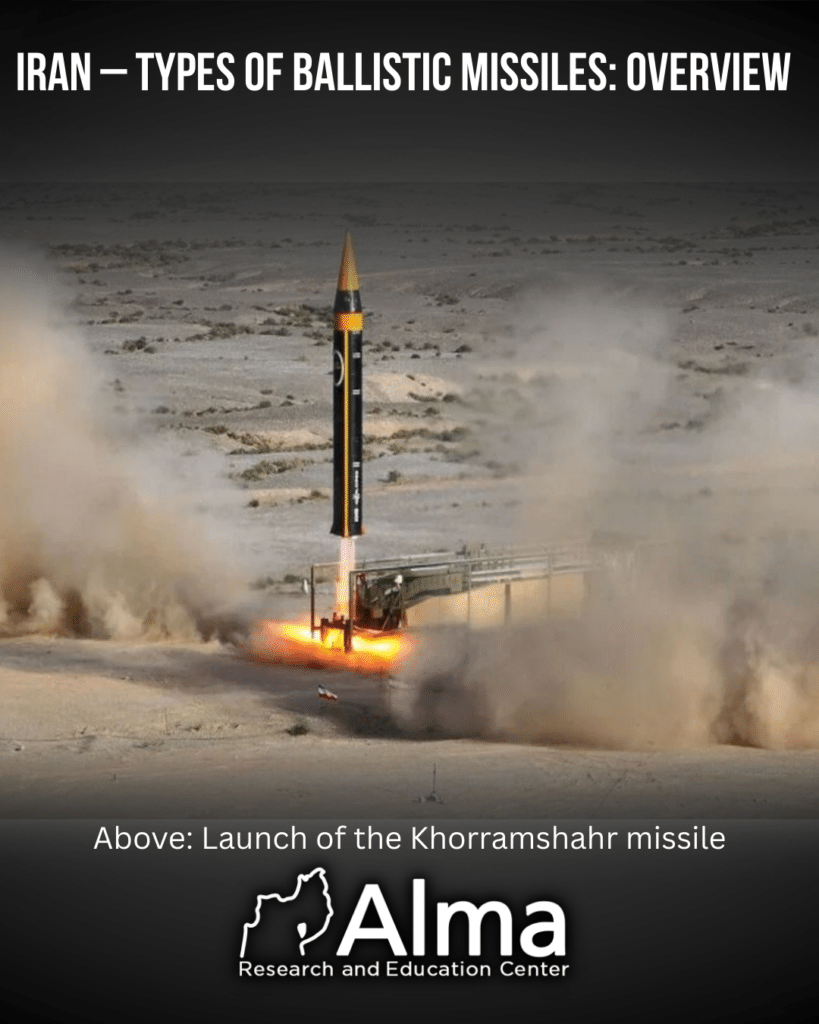
According to IDF assessments, prior to the first war against Iran in June 2025, Iran’s ballistic missile arsenal was estimated at roughly 3,000 missiles. Over the course of the 12-day conflict, Israel destroyed hundreds of these missiles, in addition to those launched by Iran.
Following the war, Iran undertook intensive efforts to rebuild its missile capabilities. Over the past eight months, it has reportedly produced dozens of missiles each month.
According to IDF estimates, by February 2026 Iran’s ballistic missile arsenal had grown to approximately 2,500 missiles. (Note: it is unclear whether this figure refers to the entire arsenal or only to missiles with an effective range capable of threatening Israel. The distribution of missiles by type is also unknown.)
The Iranian missile inventory primarily consists of short-range ballistic missiles (up to 1,000 kilometres) and medium-range ballistic missiles (1,000–3,000 kilometres).
According to various reports, long-range ballistic missiles (over 3,000 kilometres) are currently in advanced stages of development.
Range classifications follow the definitions used by the United States Department of Defense.
It should also be noted that the optimal range to central Israel from the main launch areas in western Iran is approximately 1,200 kilometres (Kermanshah / northern Tabriz / Khorramabad). By comparison, the average range to targets in the Gulf states is about 500 kilometres (Shiraz, Hajji Abad, Khvormuj ).
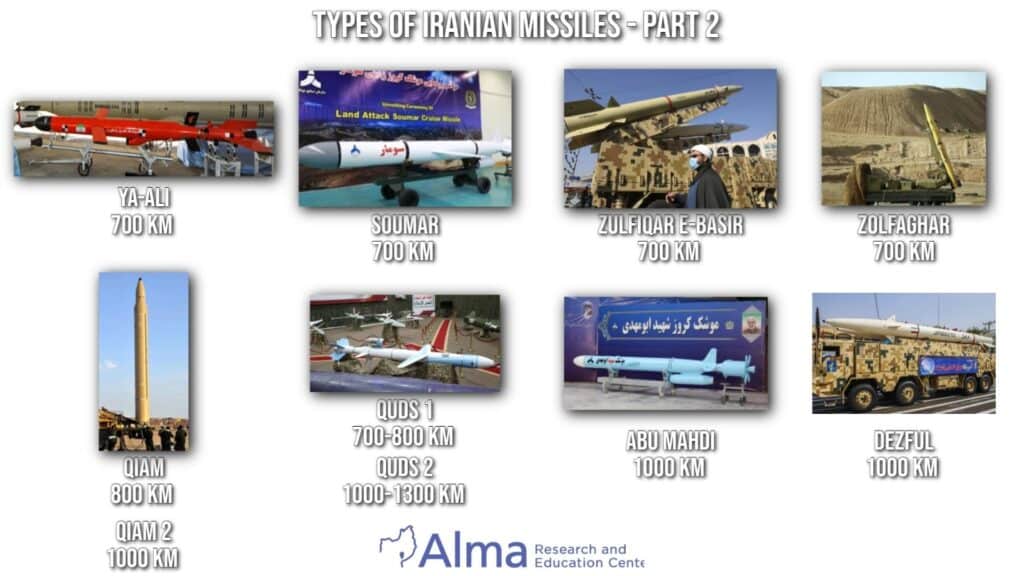
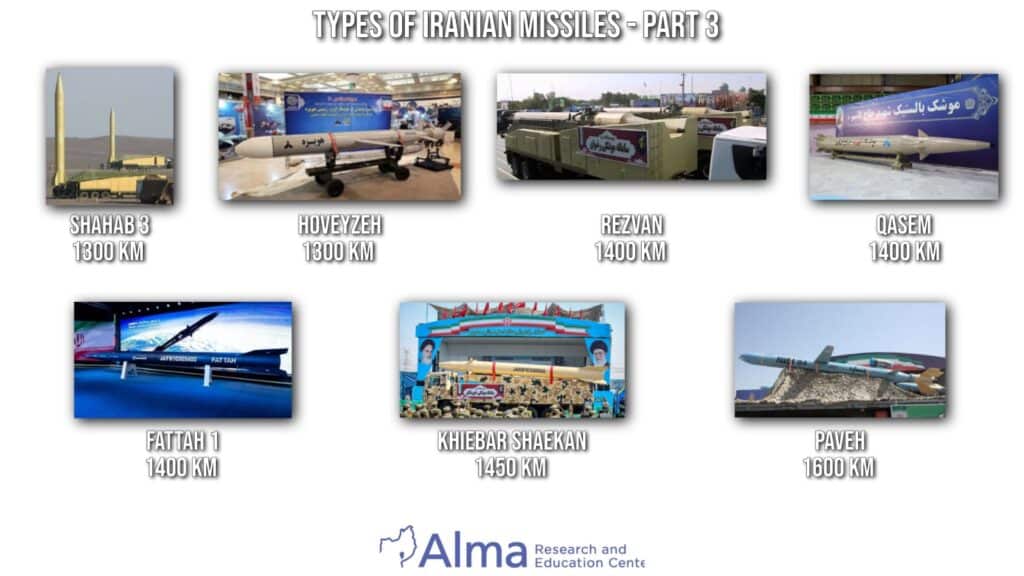
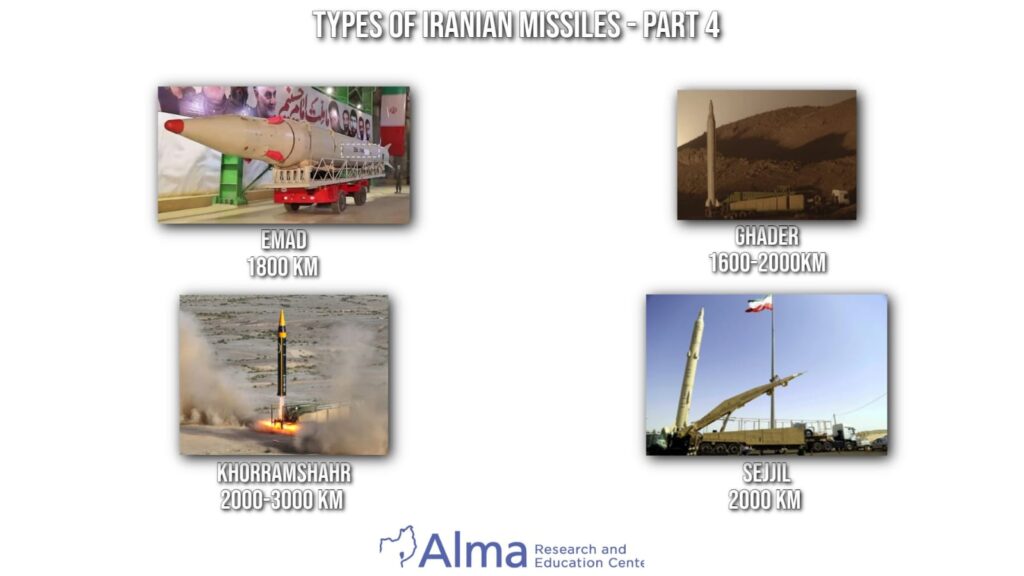
Below is a data table reviewing the types of ballistic missiles up to medium range (according to the American definitions), by the categories: name, propulsion type, range, warhead size (explosive), and accuracy radius:
| Propulsion | Range | Warhead | CEP | |
| Shahab‑1 | Liquid propellant | 300 km | 900–1,000 kg | 700–1,000 m |
| Shahab‑2 | Liquid propellant | 500 km | 750 kg | 1,500 m |
| Qiam | Liquid propellant | 800 km | 700 kg | 1,000–1,500 m |
| Qiam‑2 | Liquid propellant | 1,000 km | 100 m | |
| Rezvan | Liquid propellant | 1,400 km | ||
| Shahab‑3 | Liquid propellant | 1,300 km | 800–1,200 kg | |
| Ghadr | Liquid propellant | 1,600–2,000 km | 750 kg | 300 m |
| Emad | Liquid propellant | 1,800 km | 500–700 kg | 500 m |
| Khorramshahr | Liquid propellant | 2,000–3,000 km | 1,500–1,800 kg | Cluster‑munition dispersal option |
| Propulsion | Range | Warhead | CEP | |
| Fateh‑110 | Solid propellant | 200–350 km | 300–650 kg | |
| Fateh‑313 | Solid propellant | 500 km | 350 kg | <100 m |
| Fateh Mobin | Solid propellant | 500 km | ||
| Raad‑500 | Solid propellant | 500 km | <100 m | |
| Khalij Fars | Solid propellant | 300 km | 600 kg | <100 m |
| Hormuz | Solid propellant | 300 km | 600 kg | <100 m |
| Zolfaghar | Solid propellant | 700 km | 500 kg | |
| Zolfaghar‑e Basir | Solid propellant | 700 km | 500 kg | |
| Dezful | Solid propellant | 1,000 km | 600 kg | <100 m |
| Haj Qassem | Solid propellant | 1,400 km | 500 kg | <100 m |
| Kheibar Shekan | Solid propellant | 1,450 km | 500 kg | <100 m |
| Fattah‑1 | Solid propellant | 1,400 km | 400 kg | <100 m |
| Sejjil | Solid propellant | 2,000 km | 700 kg |
| Propulsion | Range | Warhead | |
| Ya‑Ali | Solid propellant | 700 km | 200 kg |
| Soumar | Solid propellant | 700 km | |
| Hoveyzeh | Solid propellant | 1,300 km | |
| Abu Mahdi | Solid propellant | 1,000 km | 400 kg |
| Paveh | Solid propellant | 1,600 km | 150–200 kg |
| Quds‑1 | Solid propellant | 700–800 km | 700–800 km |
| Quds‑2 | Solid propellant | 1,000–1,300 km | 1,000–1,300 km |





2 Responses
How many ballistic missile launchers does Iran have left and how many did it have before the start of the conflict on 28 Feb?
This I believe because it’s IDF sourced. This confirms the potshots at Chagos were vane attempts, especially as both failed before they reached halfway. Kak skoete, Iran!?⁸